


I show you a reliable, hands-off method for perfect sushi rice every time. I trust the white rice program on my rice cooker and a simple 1:1 grain-to-water ratio for short- or medium-grain varieties. This keeps texture predictable and avoids guesswork.
The seasoning matters: I dissolve vinegar, sugar, and kosher salt fully before adding it to hot grain. That gives a glossy look and balanced flavor without overworking the grains.
When the cycle ends, I let the pot rest briefly, then move the hot rice into a wide bowl or hangiri. I drizzle the seasoning and fold with a cutting, lifting motion so the grains stay intact. Finally, I cover the bowl with a damp towel until the rice is slightly warm or at room temperature.
Brands I rely on range from budget Aroma units to premium Zojirushi, Cuckoo, and Toshiba. For the best texture, I reach for Nishiki, Koshihikari, Tamaki Gold, or Kokuho. Follow these steps and you’ll get restaurant-level results with minimal fuss.
Key Takeaways
- Use the white rice setting and a 1:1 grain-to-water ratio for consistent results.
- Dissolve vinegar, sugar, and salt before seasoning hot rice.
- Fold gently with a cutting motion; never mash the grains.
- Let rice rest, then keep covered with a damp towel until slightly warm.
- Choose trusted brands for both the cooker and short-grain varieties for best texture.
Why I Love This Easy Rice Cooker Method
I press one button on my cooker and trust it to deliver consistent, plump grains every time. That hands-off approach frees me up to slice fish, prep fillings, and arrange nori without watching a pot. The white rice setting is keyed for short-grain, giving even heat and an ideal texture for later seasoning.
Fuzzy-logic models like Zojirushi tune timing and temperature for noticeably better texture, but budget brands such as Aroma still make reliable equipment for most home cooks. Once I nail my ratio, the appliance repeats the same outcome and builds my confidence.
The method cuts the risk of scorching or undercooking, which matters when I’m juggling several tasks. Dependable results mean I make sushi more often, and practice improves my technique.
- Hands-off consistency: one start, predictable finish.
- Better texture: fuzzy-logic fine-tunes for plump grains.
- More time: prep other items while the cooker works.
What You’ll Need: Rice Cooker, Rice, and Simple Pantry Staples
A handful of dependable tools and staples gets you from raw grain to perfect sushi rice with little fuss.
My go-to machines are the Zojirushi Neuro Fuzzy (NS-ZCC10), Cuckoo CR-0633F, Toshiba 6-Cup Fuzzy Logic, and budget-friendly Aroma. Any of these will give steady heat and reliable timing for a great finish.
- Short-grain picks: Nishiki, Koshihikari, Tamaki Gold, and Kokuho (Kokuho Rose) for the right stickiness.
- Vinegar choices: I usually mix rice vinegar with sugar and kosher salt, fully dissolved, but seasoned rice vinegar works when I want a shortcut.
- Extras that matter: a small piece of kombu for subtle umami, filtered water if tap taste is off, measuring cups, a rice paddle, and a hangiri or large shallow bowl for gentle folding.
For predictable results, measure cups carefully and keep your recipe notes. Little upgrades—filtered water, a proper rice paddle, or a hangiri—lift the finished sushi rice without adding work.
Choosing the Right Rice for Perfect Sushi Texture
Choosing the right grain makes the biggest difference in final mouthfeel and handling. I pick short-grain rice when I want that classic cling and tender bite that holds fillings and shapes well.
Short-grain vs. medium-grain vs. long-grain
Short-grain is my first choice for authentic sushi rice; it is glossy and slightly sticky. Medium-grain can stand in during shortages, but it yields a looser finish. Long-grain varieties like jasmine or basmati are drier and separate too easily, so I avoid them for rice sushi.
Amylose vs. amylopectin: why stickiness matters
Stick comes from starch makeup. Higher amylopectin means grains cling without becoming gluey. Short-grain and some medium-grain labels show that starch profile, which is why brands like Koshihikari or Tamaki Gold deliver consistent results.
- Shopping tip: Look for “sushi rice” on the bag when in doubt.
- Substitute note: Medium-grain works in a pinch but shifts the final texture.
Rice-to-Water Ratio and Timing for Consistent Results
A straightforward 1:1 rule is my baseline for steady texture and predictable results. I use one cup of dry short- or medium-grain and match it with one cup of water by volume. That simple ratio keeps hydration even and yields plump, separate grains ready for seasoning.
The 1:1 ratio I use
Measure carefully. I level cups or weigh the dry grain on a kitchen scale for the most reliable batches. Using proper tools locks in consistent rice water levels across every run.
Cook setting and brief rest for plump grains
Set the cooker to the “white rice” program; that cycle is tuned for short-grain behavior and gives the right heat and time profile. When the cycle ends, I let the pot sit closed for about 5 minutes. This rest evens moisture and finishes the texture.
- Ratio: 1 cup : 1 cup for short- or medium-grain.
- Measure: use cups or a scale for repeatable results.
- Setting: white rice on your rice cooker.
- Rest: about 5 minutes, then turn off keep-warm to avoid overcooking.
Should You Rinse Sushi Rice? Pros, Cons, and Brand Directions
A quick rinse can be the difference between distinct grains and a gummy batch. I believe rinsing clears surface starch and any debris. That helps the final texture stay plump and separated.
Rinse until the water runs clear
Swirl gently, then pour off the cloudy water. Repeat until the rinse water looks mostly clear. This reduces loose starch and keeps grains from becoming gluey.
When I skip rinsing
Some brands, like Nishiki, give directions that allow skipping. If I follow those notes, the mix can be slightly stickier. That can be useful for certain rolls or hand forms.
“Test both ways with your favorite bag and pick the texture you prefer.”
- Pro: Rinsing yields cleaner, less gummy grains.
- Con: Skipping can give more cling for rolling; follow the bag for that type rice.
- Tip: Keep one cup of rinse water for checking clarity, then set your white rice routine.
I recommend testing both methods with your go-to brand. Small changes in rinse and rice water will help dial in perfect sushi rice for your kitchen.
how to cook sushi rice in a rice cooker
I start by measuring grain and water precisely, then level the surface so heat reaches every kernel evenly. I match one cup of dry grain with one cup of water and smooth the top. This simple 1:1 ratio keeps hydration predictable and prevents uneven patches.
Measure and level the rice and water in the cooker
Leveling matters. I eye the water line and tap the pot gently so the mix settles flat. That step gives even steaming across the entire pot and keeps the final texture consistent.
Set to “white rice” and let it rest covered for a few minutes
Next, I choose the white rice program on my rice cooker. When the cycle ends, I leave the lid closed and let the pot rest about 5 minutes so steam redistributes and the grains finish plump.
Turn off warming to avoid overcooking
Do not leave keep-warm on. I switch the warmer off after the rest to stop further cooking and to protect the bottom layer from drying. Be gentle when opening and moving the inner pot so the grains stay intact.
- I level rice and water for even cooking.
- I trust the white rice setting for short-grain timing.
- I rest covered for steam redistribution, then turn off warm.
Make the Sushi Vinegar: Sweet, Salty, and Balanced
I mix a simple seasoned blend that brightens warm grains without fuss. A classic trio of rice vinegar, white sugar, and kosher salt gives that glossy finish and balanced flavor many expect from sushi rice.
DIY seasoning
Start with a flexible ratio: about 1 part vinegar : 3 parts salt : 3 parts sugar by volume, then adjust to taste. That baseline keeps tang and sweetness in harmony.
Microwave or stovetop
Gently warm the vinegar mixture so crystals fully dissolve. Microwave 20–30 seconds, stir, and repeat if needed, or heat on low until clear. Fully dissolved sugar and salt ensure even flavor and a glossy finish on the hot rice.
When I use bottled seasoned rice vinegar
For quick weeknights, I reach for bottled seasoned rice vinegar. It saves time because sugar and salt are pre-dissolved. Taste and adjust if the bottle is sweeter or tangier than your usual profile.
- Season while the grains are hot so the liquid absorbs, not sits.
- Make small tweaks—add a pinch more sugar for sweet, or a splash more vinegar for tang.
- Stir or fold immediately for even coating and shine.
“Dissolve everything first; that little step makes a big difference.”
Seasoning, Slicing, and Cooling the Rice the Right Way
I work quickly when the rice is hot, moving it to a large bowl so seasoning coats each grain. This gives more surface area and prevents uneven spots. I use a hangiri or any wide, shallow bowl for best results.
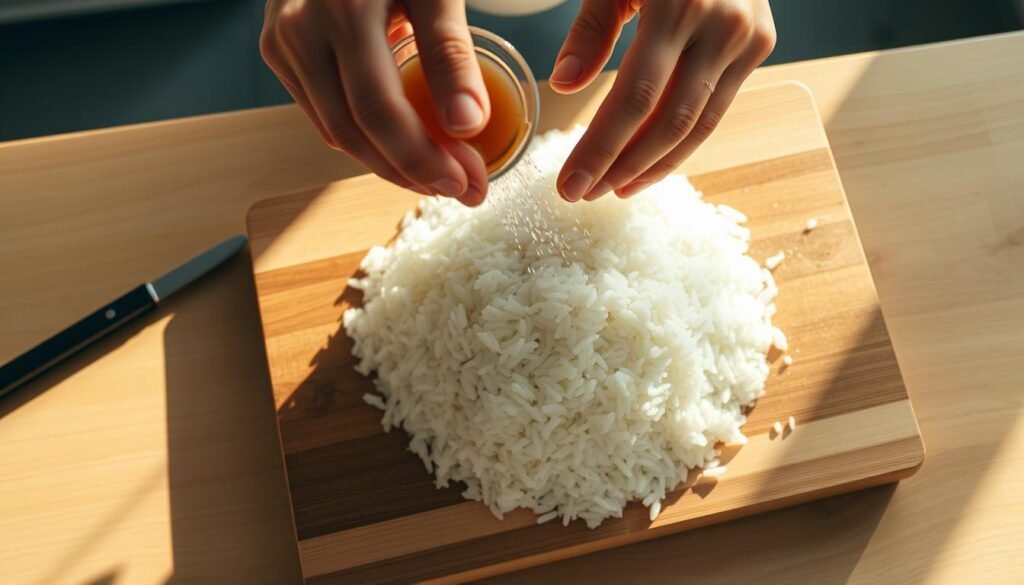
Transfer hot rice, drizzle evenly, and fold—don’t mash
I drizzle the seasoned vinegar evenly over the warm batch so every kernel picks up flavor. Then I slice through the mix instead of stirring in circles. That avoids a gummy finish.
Use a cutting and lifting motion with a rice paddle
I use a rice paddle to slice and lift gently. The motion separates and cools the grains while spreading the seasoning. Keep movements confident but light.
Cover with a damp towel; aim for warm to room temperature
After folding, I cover the bowl with a damp towel so steam doesn’t escape too fast. This prevents a crust and holds the ideal temperature. I aim for slightly warm or room temperature before handling for sushi, which helps nori lie flat and fillings stay neat.
- I move hot cooked rice to a wide bowl for even seasoning.
- I drizzle vinegar and slice with a rice paddle; never mash.
- I cover with a damp towel and use the rice when slightly warm or room temperature.
Flavor Tweaks and Methods: Choose Your Own Style
Small adjustments in vinegar and sugar steer the final profile toward bright or mellow. I start with my classic mix, then tweak one teaspoon at a time so I never overshoot the balance.
Classic balance vs. tangier or sweeter profiles: For brighter notes I add a touch more vinegar. For a softer, sweeter finish I add a pinch more sugar and a dash less salt. These tiny moves change the overall flavor without upsetting texture.
With or without kombu for subtle umami
I sometimes tuck a strip of kombu into the pot for a gentle savory backbone. It adds depth without making the batch taste seaweedy. Remove the kombu before seasoning so the balance stays clean.
Seasoned vinegar straight in the pot vs. in a bowl
I prefer moving hot grain into a wide bowl and folding in seasoned rice. That gives more control and keeps grains intact. Some cooks drizzle seasoning in the cooker pot and fold gently—that works, but be careful not to mash when you stir.
- Make one-teaspoon tweaks rather than big changes.
- Kombu adds quiet umami; use sparingly.
- Season in a bowl for even coating; pot-seasoning is a gentle shortcut.
“Tiny adjustments can bring your batch closer to your favorite spot’s signature.”
Troubleshooting Texture and Taste
A small fix often saves the batch. If the final bite feels off, I use quick, controlled steps before giving up.
Too hard or dry
If the grains seem underhydrated, add warm water in tiny amounts. I pour in two tablespoons at a time, cover the bowl, and microwave for about 30 seconds.
Repeat this cycle for a few rounds until the kernels feel plump. This restores moisture without turning the batch mushy.
Too soft or gummy
Overly soft results usually point to too much water or rough handling. For the next run, I reduce water slightly and rinse more carefully.
Also, avoid vigorous stirring while seasoning—gentle slicing preserves each kernel.
Sticky vs. gluey
Keep movements light. I fold with a cutting motion and stop as soon as seasoning is even. That prevents crushed, gluey clumps and retains good mouthfeel.
- Quick rescue: add small amounts of water, warm in short bursts, check every few minutes.
- Prevention: lower water next batch if it was soggy, and never overmix.
- Practice note: I write down adjustments so future attempts land closer to my ideal time and texture.
“A little patience and small changes win more often than big corrections.”
Make Sushi at Home: Rolls, Hand Rolls, and Nigiri
I find assembly is easiest when the grain is slightly warm and pliable, not steaming hot. That temperature keeps nori supple and makes spreading the seasoned mix smooth. I aim for slightly warm or room temperature before I start any roll or nigiri.
Best handling tips for nori and slightly warm rice
Keep your hands damp while you work. Damp palms stop the grain from sticking and let you shape pieces cleanly.
Cover the bowl with a damp towel between batches so the surface doesn’t dry out. This keeps texture steady while you assemble rolls or hand pieces.
Portioning: how much cooked rice per roll
For thin hosomaki, I use about 1/2 cup cooked rice per roll. For larger maki with multiple fillings, plan closer to 1 cup.
- Use even pressure when you roll so edges stay neat.
- Keep movements gentle — tight, not smashed.
- Wipe the knife between cuts for clean slices.
“Slight warmth and steady hands make homemade sushi simple and tidy.”
Storing, Reheating, and Same-Day Best Practices
I guard texture by planning what will happen after the batch is seasoned. If I plan to assemble that same day, I keep the bowl covered at room temperature so the surface stays soft and workable.
Keep the top covered with a damp towel and a loose layer of plastic wrap. That prevents a crust while you prep fillings. I use this approach for about 3–4 hours and it keeps the grains pliable for rolling and forming.

Short-term fridge and freezing options
I avoid refrigerating right away because cold air hardens texture. If I must chill leftovers, I cool the cooked rice quickly, then store in airtight containers for up to 3 days.
For longer storage I freeze portions flat in sealed bags for up to 2 months. Thaw slowly in the fridge, then reheat gently.
Gentle reheating steps
Reheat at medium power in short bursts. I nudge the microwave to roughly 70% power and warm in 30-second intervals, fluffing between rounds until warm and fluffy. This restores moisture without overcooking.
Why fresh gives the best result
Freshly made rice delivers superior bite and aroma. For the best flavor every time, I make only what I need and rely on careful covering and brief room temperature hold when assembly is imminent.
- Same day: covered at room temperature with a damp towel for up to 3–4 hours.
- Fridge: cool fast, store airtight for up to 3 days; reheat gently.
- Freezer: freeze flat up to 2 months; thaw slowly and warm in short bursts.
“Fresh batches give the best texture and flavor—plan portions so you get that bite every time.”
Conclusion
I finish with a short rest, then transfer the warm grains to a shallow bowl for gentle folding and seasoning.
Use a precise 1:1 ratio, select the white rice setting, season while warm with dissolved vinegar, sugar, and salt, and fold with a cutting motion. These steps form the core of my reliable recipe for perfect sushi rice.
Choose quality short-grain and a dependable cooker so you get consistent results every time. Tweak sweetness or tang to match your palate, and keep the bowl covered with a damp towel so the grain stays pliable and ready for making sushi.
I encourage you to practice often. With small tweaks and steady technique, you’ll confidently make sushi rice that pleases family and guests.




















One Response