

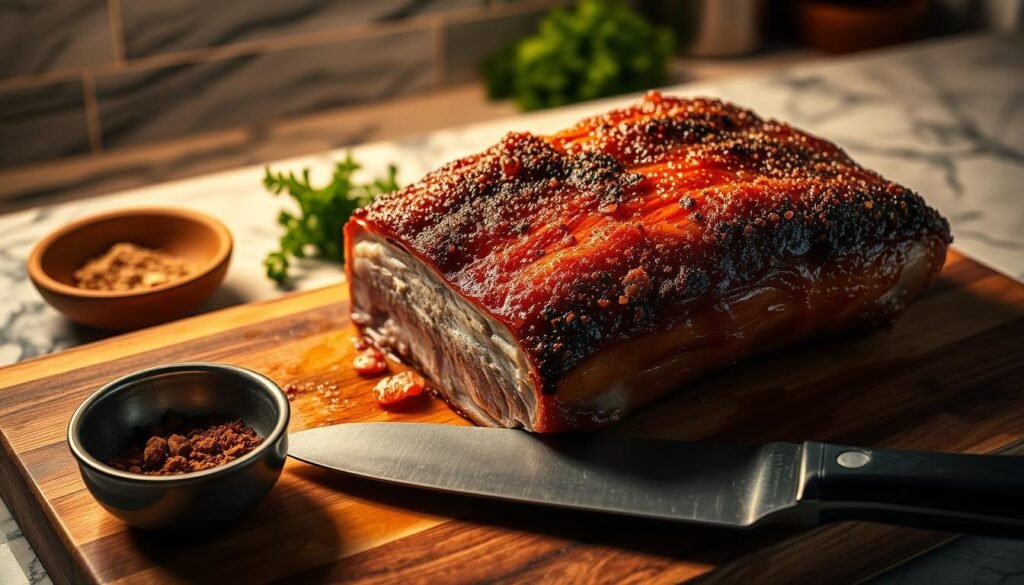
Pork belly is known for its rich flavor and tender texture. It’s a versatile cut that can make your cooking stand out. Whether you’re a seasoned chef or just starting, knowing how to work with this cut is crucial.
Cooking pork belly to perfection takes skill, but with the right techniques, you can get amazing results. It’s loved by both chefs and home cooks because it can be cooked in many ways.
By learning pork belly cooking tips, you can make dishes that taste great and look good too.
Key Takeaways
- Understanding pork belly’s rich flavor and tender texture is key to cooking it well.
- Pork belly is a versatile cut that can be prepared in various ways.
- Mastering cooking techniques is essential for achieving mouthwatering results.
- Pork belly is a favorite among chefs and home cooks due to its adaptability.
- With the right tips, you can create delicious and visually appealing dishes.
Understanding Pork Belly: What Makes It Special?
Pork belly is a standout ingredient in many cuisines. You might wonder what makes it special. Its anatomy and rich flavor are the answers.
Pork belly comes from the pig’s abdomen. This makes it tender and flavorful when cooked right. The mix of fat and meat offers a rich and indulgent taste.
Exploring the Cuts of Pork Belly
The cuts of pork belly vary, but they include skin, fat, and meat. Understanding these cuts is key to preparing pork belly to its best. You can cook it with skin on for a crispy texture or without for simplicity.You can learn about how-to-cook-black-beans
The Flavor Profile of Pork Belly
Pork belly’s flavor is rich and creamy, making it a favorite. The fat layers make it tender and juicy when cooked slowly. This method melts the fat, adding flavor to the meat.
Interestingly, cooking pork belly low and slow can also work for other meats, like chicken breast. An air fryer can make chicken breast juicy, just like pork belly.
Essential Tools for Cooking Pork Belly
Mastering pork belly cooking is more than just a recipe. It needs the right tools. You’ll need kitchen gadgets and cookware that can handle the task.
Must-Have Kitchen Gadgets
A sharp knife is key for cutting and trimming the pork belly. A meat thermometer is also crucial to ensure it’s cooked safely. Other gadgets like a mandoline for slicing and a garlic press for flavor are useful too.
Choosing the Right Cookware
The right cookware is vital for cooking pork belly. A heavy-duty roasting pan is great for roasting. It spreads heat evenly and can handle high temperatures.
For braising, a large Dutch oven is perfect. It’s great for slow cooking and tender results. When picking cookware, think about the material and size. Stainless steel and cast iron are good choices because they keep heat well and last long. Make sure it’s big enough for the pork belly.
Preparing Pork Belly: Key Steps to Follow
To get delicious results, you must prepare your pork belly right. It’s all about the texture and flavor. Follow these steps to get your pork belly ready for cooking.
How to Clean the Pork Belly
Cleaning the pork belly is the first step. Start by rinsing it under cold water to remove dirt. Then, dry it with paper towels, making sure it’s dry, if you plan to score the fat. Proper cleaning leads to a crispy skin and better flavor.You can learn about how-to-cook-garbanzo-beans
Cutting Techniques for Even Cooking
Cutting the pork belly right is key for even cooking. You can cut it into pieces or leave it whole, based on your recipe. Use a sharp knife for clean cuts.
Scoring the fat in a crisscross pattern helps get a crispy outside and a tender inside. This method improves texture and flavor absorption.
Be careful not to cut too deep into the meat. This can make it tough. Aim for precise cuts for even cooking and presentation.
Cooking Techniques: Different Ways to Prepare Pork Belly
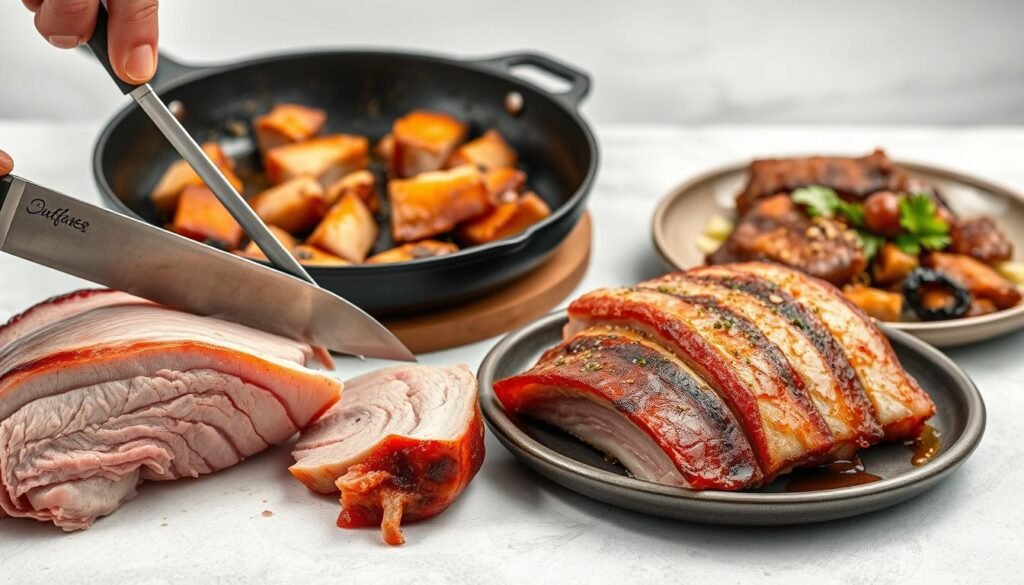
Pork belly is a versatile cut that can be cooked in various ways. The right cooking technique can make the dish a highlight of any meal. Whether you’re looking for a crispy skin or tender meat, there’s a method to suit your taste.
Roasting Pork Belly to Perfection
Roasting is a popular method for cooking pork belly. It allows the skin to become crispy while keeping the meat tender and juicy. To roast pork belly, preheat your oven to a high temperature, score the skin, and season it with your choice of spices. A key tip is to ensure the skin is dry before roasting to achieve that perfect crispiness.You can learn about how-to-cook-chicken-wings
Braising for Tender Flavor
Braising pork belly is another excellent technique. It’s great for those who prefer their meat to be fall-apart tender. This method involves cooking the pork belly in liquid on low heat for an extended period. The result is a dish that’s not only flavorful but also incredibly tender. The slow cooking process allows the connective tissues to break down, making the meat easily shreddable.
Grilling Pork Belly: A Smoky Twist
For those who enjoy a smoky flavor, grilling pork belly can be a fantastic option. Grilling adds a charred exterior to the pork belly, contrasting beautifully with the rich, unctuous meat inside. To grill pork belly effectively, it’s essential to slice it into thinner pieces to ensure even cooking. Marinating the slices before grilling can also enhance the flavor, making it even more delicious.
Each of these cooking techniques offers a unique way to enjoy pork belly. By experimenting with different methods, you can find your favorite way to prepare this delicious cut of meat.
Seasoning and Marinating: Elevate Your Dish
Seasoning and marinating are key steps in making a delicious pork belly dish. The right techniques can boost the flavor and texture of your pork belly.
Marinating pork belly is a game-changer. A good marinade adds flavor and tenderizes the meat.
Classic Marinades for Pork Belly
Classic marinades for pork belly include soy sauce, garlic, and ginger. You can also try brown sugar, apple cider vinegar, and spices. Don’t forget to experiment with balsamic or rice vinegar for a unique flavor.
For a simple marinade, mix 1/4 cup soy sauce, 1/4 cup brown sugar, 2 cloves garlic, and 1 tablespoon ginger. Let it marinate for 2 hours or overnight for the best taste.
Creative Seasoning Ideas to Try
Want to get creative with your seasoning pork belly? Try a dry rub or spice blend. A dry rub gives a nice crust, while a spice blend adds depth.
Consider using Korean chili flakes, gochugaru, or a mix of smoked paprika, garlic powder, and brown sugar. You can also use different salts like sea salt or Himalayan pink salt for texture and flavor.
Cooking Times and Temperatures for Pork Belly
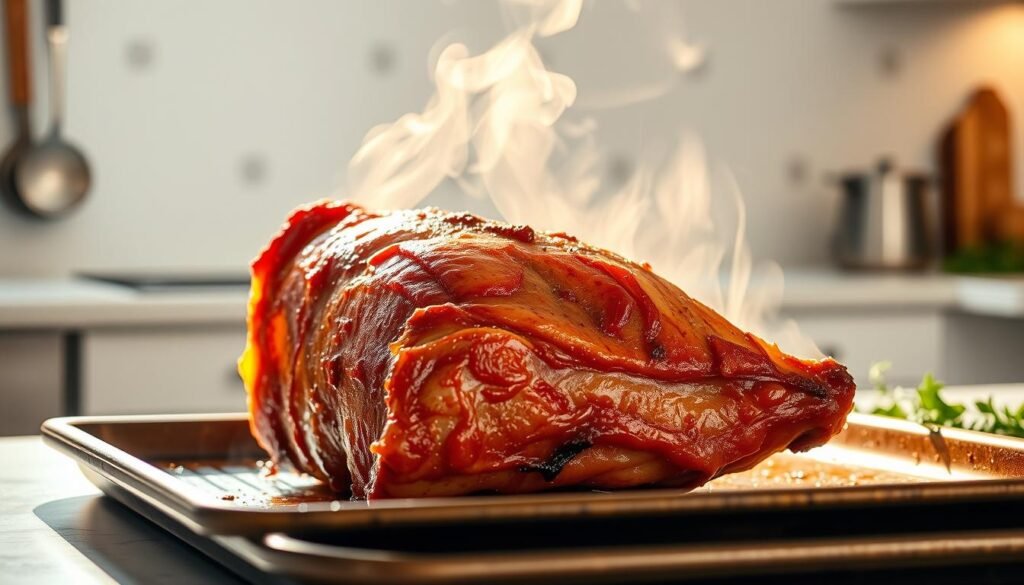
To cook pork belly perfectly, knowing the right cooking times and temperatures is key. This makes your dish not only tasty but also safe to eat.You can learn something about how-long-to-cook-spaghetti-squash
Roasting Times for Different Weights
The size of your pork belly affects how long it needs to roast. Roast it at 325°F (165°C). A 2-3 pound piece will roast for about 2-2.5 hours. Larger pieces, 4-5 pounds, may take 3-4 hours.
It’s important to check the pork often to prevent overcooking.
Recommended Internal Temperatures
The internal temperature of the pork belly is the best way to check if it’s done. It should reach at least 145°F (63°C). After that, let it rest for 3 minutes. A meat thermometer is the best tool for checking the temperature.
Tips for Checking Doneness:
- Use a meat thermometer for accuracy.
- Check the temperature in the thickest part of the meat, avoiding any fat or bone.
- Let the pork rest for 3 minutes before serving to allow the juices to redistribute.
By following these tips, you can make a pork belly that’s both tender and full of flavor.
How to Serve Pork Belly: Perfect Pairings
To enjoy pork belly, you need the right sides. Serving it is more than just putting it on a plate. It’s about finding the perfect mix of flavors and textures.
Best Side Dishes to Complement Pork Belly
Choosing the right sides can make your pork belly meal better. Some classic choices include:
- Roasted vegetables: Carrots, Brussels sprouts, or parsnips roasted to perfection complement the rich flavor of pork belly.
- Mashed potatoes: A comforting side that pairs well with the unctuous texture of pork belly.
- Pickled vegetables: A tangy and crunchy contrast to the fatty pork belly.
Ideal Sauces and Condiments
The right sauce or condiment can add flavor to your pork belly dish. Consider:
- Apple cider jus: A sweet and tangy sauce that cuts through the richness of the pork.
- Soy sauce or miso glaze: Adds a savory umami flavor.
- Spicy mustard: For those who like a bit of heat.
By picking the right sides and sauces, you can make a memorable pork belly meal.
Common Mistakes to Avoid When Cooking Pork Belly
To get delicious results with pork belly, you must avoid common mistakes. Cooking pork belly can be tricky. But knowing the pitfalls helps you make a tasty dish.
Overcooking and Its Consequences
One big mistake is overcooking pork belly. Overcooked pork belly becomes tough and dry. It loses its rich, creamy texture.You can learn something about how-long-to-cook-a-15-lb-turkey
To avoid this, watch the cooking time and temperature closely. Use a meat thermometer to check the internal temperature.
Overcooking also makes the meat lose flavor. When pork belly cooks too long, the fat melts out. This leaves the meat dry and tasteless. Cooking it to the right temperature keeps the flavor and texture.
Neglecting the Skin for Crispy Texture
Another mistake is ignoring the skin, which can make it not crispy. To get a crispy skin, score the skin deeply and dry it well before cooking. This helps the skin get crispy during cooking.
Not seasoning the skin right can also make it less crispy. Rub the skin with salt and other seasonings to improve flavor and texture.
Troubleshooting: Fixing Common Pork Belly Issues
Don’t let a tough texture or bland flavor ruin your pork belly dish; here’s how to fix it. Even with the best planning, issues can arise when cooking pork belly. This section will address common problems and offer practical solutions to salvage your dish.
Dealing with Tough Texture
A tough texture in pork belly can be disappointing. This issue often arises from undercooking or overcooking the meat. To avoid this, ensure you’re cooking it to the right internal temperature. For tender pork belly, it’s crucial to cook it low and slow, specially when braising.
If your pork belly turns out tough, consider shredding it and using it in dishes like tacos or stews, where texture isn’t as critical. Or, you can try slicing it thinly against the grain and serving it with a sauce to mask any toughness.
Enhancing Flavor After Cooking
If your pork belly lacks flavor, there are still ways to enhance it. Adding a flavorful sauce or glaze during the last stages of cooking can significantly boost the taste. You can also try marinating sliced pork belly in a mixture of your favorite seasonings and acids (like vinegar or citrus juice) to add depth.
Enjoying Leftovers: Creative Ways to Use Cooked Pork Belly
You’ve cooked pork belly to perfection, and now you have extra. Don’t let it go to waste! You can turn it into new, tasty dishes that will wow everyone.
Pork Belly Tacos: A Quick Recipe
Shred your leftover pork belly. Then, warm it with taco seasoning. Serve it in a tortilla and top it with salsa, avocado, or sour cream. This gives your pork belly a Mexican flavor.
Incorporating Pork Belly into Soups and Stews
Pork belly adds rich flavor to soups and stews. Dice the leftover pork and add it to your favorite recipes. It makes the broth savory and satisfying.You can learn something about how-to-cook-chicken-legs-in-the-oven
Try these ideas to see leftover pork belly in a new light. Experiment with different recipes to find your new favorite dish.