


I’ll show my favorite way to treat this summer vegetable so it sings on weeknights. I focus on hot, fast methods that lock in texture and big flavor.
In season from July through September, fresh pods are small and firm. I like a quick skillet sauté with onions and olive oil or oven roasting at 425–450°F on parchment for a crisp finish.
To tame slime, pick firm pods, cook at high heat, and add acidic notes like tomatoes or lemon juice. I reach for garlic, smoked paprika, fennel, and cumin for fast, layered seasoning.
You’ll get clear timelines and simple steps for stovetop, oven, and fried versions. I also cover storage and reheating—roasted leftovers revive in a 350°F oven for 5–10 minutes and keep refrigerated for a few days.
Key Takeaways
- Use small, firm pods and high heat for the best texture.
- Skillet sauté or oven roast for quick, craveable results.
- Add acidic ingredients to reduce sliminess and boost flavor.
- Try spice blends with smoked paprika, fennel, and cumin.
- Reheat roasted pieces at 350°F for 5–10 minutes; refrigerate short-term.
Why I love cooking okra and what you’ll learn today
Proper heat and the right oil make this vegetable sing. I love that a quick blast of high heat turns slimy pods into a smoky, slightly crisp side. When roasted or seared, the result is savory with bright, gentle sweetness.
I’ll share my go-to recipe formats: a skillet that starts with onions caramelized for 10–15 minutes, then the pods added and simmered with a splash of water and salt for 5–10 minutes until tender.
My approach is simple. You’ll get tips on using heat strategically, building flavor in layers—fat first, aromatics next, then spices—and reading texture cues so the dish stays crisp, not mushy.
- I name the spices I reach for: garlic, smoked paprika, fennel, and cumin.
- I offer quick swaps for Cajun or Italian twists and notes on oil choice for best browning.
- Expect practical, no-nonsense tips that make this side dish reliable on weeknights.
Fresh okra 101: when to buy, how to pick, and quick prep
Summer markets make this easy. In the U.S., the main season runs July through September, and that’s when I buy fresh okra at stands and farmers’ markets.
Seasonality in the United States: July through September
I look for small, firm pods. Bright green, smooth skin and perky tips are key. Avoid brown spots or shriveled ends.
How I choose tender pods and avoid tough, fibrous okra
If a tip won’t snap, I leave it behind. Oversized specimens often mean stringy flesh and lots of seeds. Smaller pods cook evenly and stay tender.
Prep basics: trimming ends, cutting discs or lengthwise
I rinse and dry, trim the stem, then place trimmed ends in a bowl so my board stays tidy.
- I usually cut into ½–1-inch discs or slice lengthwise, depending on the final way I want it to brown.
- I often prep a cup or two at a time for quick weeknight work.
- When tomatoes are in season, I plan a skillet that pairs both.
A light dusting of paprika and a pinch of garlic powder during prep adds color and gentle seasoning without masking freshness.
How to cook okra without it getting slimy
By forcing fast evaporation with strong heat, I prevent that gelatinous feel and lock in browning. I work with small, firm pods and clear space on the pan so steam can’t build. This approach keeps the interior tender and the edges pleasantly crisp.

My high-heat, dry-roast approach for better texture
I roast at 425–450°F on a parchment-lined sheet in a single layer. The high heat concentrates sweetness and chars edges without making the pan wet.
Acid, salt, and size: tomatoes, lemon juice, and smaller pods
I pat pods dry and season lightly with salt early, then finish and adjust at the end. A quick toss with tomatoes or a squeeze of lemon juice brightens flavor and reduces the perceived slimy quality.
- Single layer: space matters — avoid overcrowding so moisture evaporates fast.
- Dry surface: pat dry; surface water encourages that slimy bit.
- Finish with acid: tomatoes or lemon juice lift the dish and tighten texture.
When I follow these steps, I get tender pieces with crisp edges and none of the issues people worry about. The result is reliable texture and bright flavor every summer night.
How to Cook Okra
A quick skillet sauté with sweet, golden onions is my weekday shortcut for reliable texture and flavor. I use a large cast-iron skillet so the surface stays hot and edges brown nicely.
My go-to skillet sauté with onions
I heat a tablespoon of olive oil in the skillet over medium, or swap in coconut oil when I want a subtle tropical note.
I add thinly sliced onion and cook low and steady for 10–15 minutes until the pieces are golden brown. That step builds sweetness and a savory base.
Timing, heat, and fat: olive oil vs coconut oil in a cast-iron skillet
Next I add 1 lb trimmed, 1‑inch pieces and pour in ½ cup water with a pinch of salt. I stir occasionally and let the steam soften the vegetable for 5–10 minutes.
When the water evaporates, I let the pan do the work—edges can sear while the centers stay tender. I finish with a teaspoon of garlic powder, a grind of pepper, and a quick splash of citrus juice for lift.
“Keep the skillet roomy and watch the minutes; that balance between steam and sear is what makes the dish sing.”
- Pan: large cast-iron for steady heat.
- Fat: olive oil or coconut oil, enough for good contact.
- Finish: citrus juice and adjust salt, fold in tomatoes if you want a saucier okra recipe.
Oven-roasted okra: crispy edges, zero slime
A hot oven and a single-layer sheet turn slimy pods into crisp, golden bites. I preheat the oven to 425–450°F and line a baking sheet with parchment so the surface browns, not steams.
Sheet pan setup: 425–450°F, single layer, parchment, and oil
In a bowl I toss fresh okra cut into ½–1-inch pieces with olive oil, a pinch of salt, and a teaspoon-level dusting of garlic powder. I add smoked paprika, fennel, and cumin for balanced seasoning.
Spice paths I love: garlic, smoked paprika, fennel, cumin
Spread the pieces in a single layer so every side sees heat. Roast at 425°F for about 25–30 minutes, or at 450°F for roughly 15 minutes, until edges are golden and there is no okra slimy texture.
Flavor twists: Cajun + cayenne, Italian + Parmesan, BBQ glaze, lemon & black pepper
I sometimes add a teaspoon of cayenne pepper for a Cajun lift. For Italian notes I stir in Italian seasoning and grate Parmesan before serving. A thin brush of BBQ sauce makes a smoky-sweet finish. A squeeze of lemon juice and a crack of black pepper brightens the dish at the end.
- Pro tip: even pieces mean even time on the pan.
- Fat: enough oil for sheen and browning, not puddles.
- Serve: this side dish scales easily and pairs with grains, beans, or grilled mains.
Fried and breaded okra, Southern style
This Southern riff uses cornmeal, steady oil heat, and careful batches for shatteringly crisp bites. It’s the kind of recipe that fills a table at game day or a summer cookout.
Cornmeal breading and a hot cast-iron skillet for golden brown bites
I heat a cast-iron skillet and add enough oil for shallow frying. Keep the pan hot so the coating crisps quickly and avoids sogginess.
- I toss sliced pods in seasoned cornmeal with a teaspoon of garlic powder, salt, and a pinch of pepper for a classic crust.
- Work in small batches and gently add okra so the oil stays steady. Pull pieces once they’re golden brown and crisp.
- A dash of cayenne pepper in the mix adds warmth without stealing the show.
- I set a wire rack over a sheet pan so each cup of fried okra stays crunchy while I finish the next round.
- For a lighter riff, skip eggs and go straight from buttermilk (optional) into the cornmeal.
If the skillet cools, I pause — steady heat is the key to a shatteringly crisp exterior and a tender center. I always finish with a quick pinch of salt so it sticks to the hot crust.
My favorite okra seasonings and pantry pairings
I reach for a handful of spices that pair with bright finishes and crisped edges. A simple lineup keeps the pantry useful on weeknights and weekend batches alike.
Everyday spices: black pepper, garlic, paprika, cayenne, cumin
I keep garlic powder, smoked paprika, cumin, and a pinch of cayenne close at hand. Black pepper adds a dry, peppery kick that plays well with salt and a squeeze of lemon juice.
Bold blends: Baharat or Berbere for warm, complex flavor
When I want depth, I swap the basic set for Berbere or Baharat. Those warm blends add fruit and smoke notes that lift roasted okra without stealing the spotlight.
Acidic finishers: tomatoes, lemon juice, and a pinch of salt
I often finish a tray with diced tomatoes or a quick squeeze of lemon juice and a final pinch of salt. A teaspoon drizzle of olive oil at the end revives sheen and helps seasoning cling.
- Small toolkit: garlic, paprika, cumin, cayenne — repeatable and fast.
- Alternative paths: Italian herbs + Parmesan or a BBQ glaze for smoky-sweet notes.
- Goal: keep fresh okra as the star and use seasoning to enhance, not bury, its natural sweetness.
Fresh vs frozen okra: what changes and what stays the same
Frozen okra can be a real weeknight helper. I keep bags on hand because they arrive pre-trimmed and ready for a quick roast or skillet finish. The trade-off is a touch more surface moisture, so I adjust heat and time.
When frozen options shine and how I adjust time and heat
For roasting, I spread frozen okra in a single layer on parchment. I roast very hot so excess water evaporates fast and pieces crisp instead of steaming.
On the stovetop, I give frozen pieces a little extra time and a touch more fat so they brown instead of sit in water. If chunks are still cold, add minutes and keep the pan roomy so edges can sear cleanly.
- I love frozen okra for busy nights—no trimming or slicing required.
- Season the same as fresh and taste before final salt adjustments.
- For larger okra pods in mixes, thaw briefly or halve them for even cooking.
With steady heat management, frozen okra makes a reliable, tasty dish.
Serving ideas, storage, and reheating tips
A simple finish and smart storage keep this veggie tasting bright for days. I often serve it as a warm side beside rice, beans, curries, or stews. It plays well with grilled meats and curried mains.
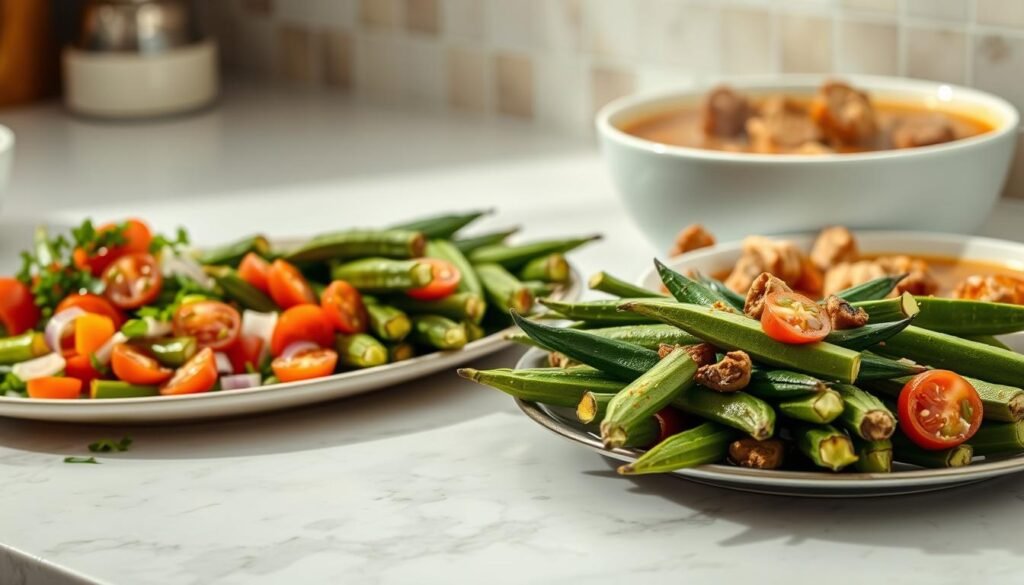
What pairs well
I plate okra with grains and legumes for a balanced meal. A bowl with tomatoes, rice, and a protein makes a great lunch that travels.
Finish with a quick squeeze of citrus juice and a crack of pepper right before serving for bright flavor.
Fridge life and reheating
I store roasted pieces in a shallow bowl or airtight container in the fridge for up to 3 days. That keeps texture more reliably than a deep container.
To revive crisp edges, I spread the pieces on a sheet pan and warm at 350°F for 5–10 minutes until heated through. It takes only minutes and brings back color and bite.
- Packable: pair with tomatoes, grains, and a protein for easy lunches.
- Taste: sample after reheating and add a pinch of salt if needed.
- Serve: set a lemon wedge at the table so everyone can adjust acidity and flavor.
“Leftovers that get this simple warm-up feel fresh again and make weeknights easier.”
Conclusion
A little high heat, sensible seasoning, and the right finish are the easiest way I’ve found to make this vegetable sing during its season. I rely on clear cues so each bite is crisp and bright.
I suggest starting with one okra recipe and repeating it until the timing feels natural. A skillet method takes about 25 minutes; a hot roast at 425–450°F minimizes slime. For portions, plan roughly a cup per person, add a splash of water or oil if needed, and finish with a squeeze of juice for lift.
If you crave crunch, a small batch of fried okra in hot cast iron with cornmeal delivers the classic bite. Frozen okra is handy for busy nights—keep the pan hot and add a bit more time. I stick to pantry spices like paprika, pepper, and a pinch of cayenne when I want extra spark.
Pick one recipe, practice it, and have fun—this simple dish can slot into many meals.
















One Response