
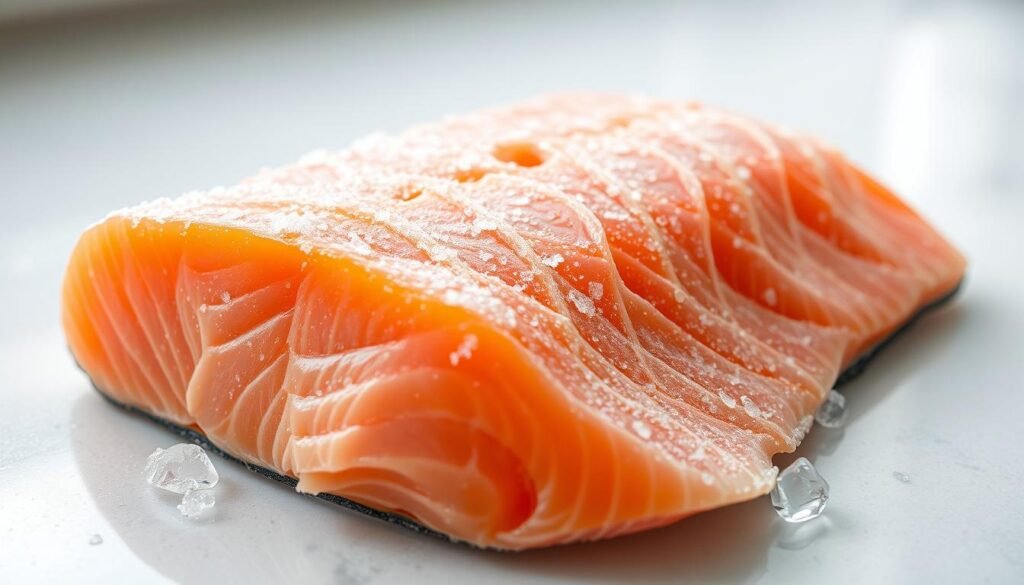
I’m laying out my complete, step-by-step plan for getting a restaurant-quality fillet from the freezer to the table without stress.
I’ll walk you through the reliable methods I use—air fryer, oven baking, an oven poach-then-bake trick, and a quick stovetop route—so you can pick the way that fits your evening and your gear.
I trust a thermometer and visual cues to hit the right finish point every time. You’ll learn timing, finishing temperatures, and simple prep that keeps the meat juicy and flaky.
My notes cover practical tips like spacing fillets, draining excess liquid, and handling different cut sizes. Whether you want a fast air fryer run or a gentler oven method, I make the process approachable and repeatable.
Key Takeaways
- I provide step-by-step methods for freezer-to-table success.
- Air fryer and oven techniques are both reliable — I show timing and temps.
- Use a thermometer and look for opaque, flake-ready flesh.
- Small prep steps—spacing, draining, finishing—prevent dryness.
- Options include quick sears and poach-then-bake for different textures.
- Recipes scale for fillet size and handle pieces stuck together.
Why I Love Cooking Frozen Salmon for Quick, Delicious Meals
I rely on frozen fillets because they let me turn a busy night into a great dinner with almost no planning.
Flash-freezing locks in flavor, so my seafood often tastes like it did the day it was caught. Keeping portions in the freezer means I always have a healthy option ready for a fast meal.
Using an air fryer from frozen usually takes about 15 minutes or less. That saves time and avoids the soft texture that sometimes happens when fillets sit in the fridge while thawing.
Buying in bulk and portioning for the freezer cuts waste and makes weeknight planning simple. I switch seasonings for different recipes and turn one fillet into many dishes—pasta, salads, or tacos—without extra fuss.
- Consistent results: flash-frozen quality keeps meals reliable.
- Fast prep: air fryer and other methods get dinner on the table quickly.
- Flexible portions: grab one package or several for a family dish.
Safety, Internal Temperature, and Doneness Basics
Safe finishing starts with a clear internal temperature target. I aim for a range depending on texture preference and safety. The FDA recommends temperature 145 for fish, but many people like their fillet a touch juicier.
Target temperatures and what they mean
Medium often lands around 125–130°F, medium-well at 130–135°F, and well-done at 135–145°F. For strict safety, follow internal temperature 145.
Where to check with a thermometer
I insert a quick-read probe into the center of the thickest part so the reading reflects the coolest point. That prevents undercooking and gives consistent results.
Visual cues that back the numbers
Besides the probe, look for the flesh to turn opaque and to flake cleanly with a fork. These signs match the temperature and help when the probe is hard to place.
- I check early and often, especially on thin or tail-end cuts.
- I season simply with salt and pepper so the natural flavor shines.
- For very thick fillets I rest them a minute; carryover heat finishes them without drying.
“A quick thermometer habit beats guesswork every time.”
Air Fryer Method: My Preferred Way to Cook Frozen Salmon
I use an air fryer for fast, reliable results. It gives a crisp top and tender center with little hands-on time.
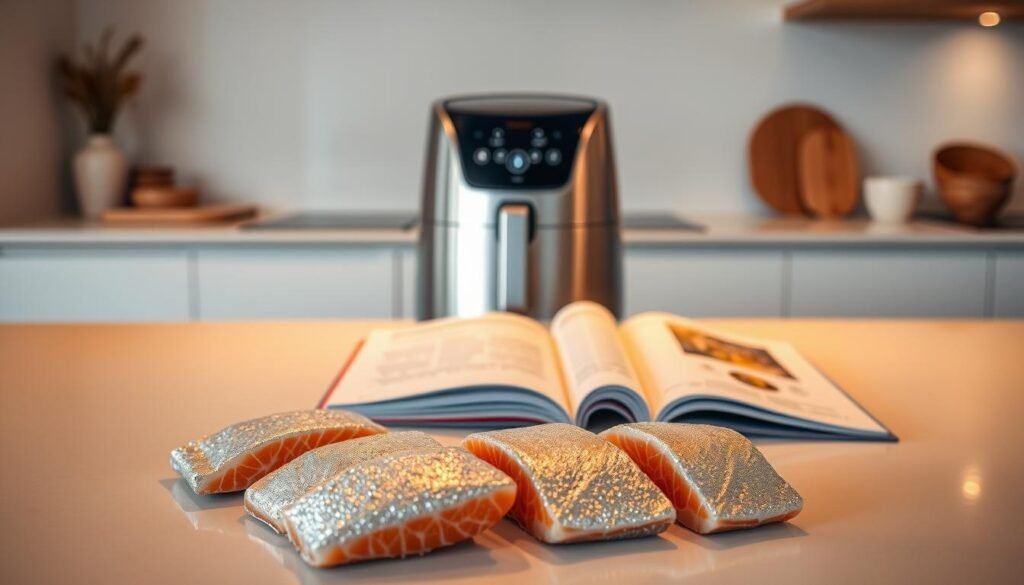
Preheat first: I set the unit to 390–400°F, then place frozen salmon in the basket skin-side down. A short 7–9 minute burst softens the center and loosens stuck pieces.
Finish and seasoning
After that initial phase I drain any pooled water and separate fillets if needed. I brush on a glaze — brown sugar-soy or lemon-Dijon — then return the tray for another 7–9 minutes.
Skin and spacing tips
- Leave skin down; it crisps and releases cleanly when nearly done.
- Place fillets in a single layer with space so hot air circulates.
- If the pieces leak, pause, drain, and add a touch of oil or glaze for color.
“I trust a quick read of the internal temperature more than the clock.”
Timing and temperature: Total cook time is usually 14–18 minutes. I stop at about 125°F for medium and go toward 145°F for well-done. Use minutes as a guide, not a rule, and trust the probe for the final call.
how to cook frozen salmon in the oven (Baking Method)
A straightforward oven bake can turn frozen fillets into a weeknight win. I use steady heat and a simple setup for reliable, hands-off results.
Setup: I preheat the oven to 375°F, line a baking dish or sheet pan with foil, and space the fillets so hot air circulates. This cuts steam and keeps the texture clean.
Setup: 375°F, foil, and spacing fillets on a baking sheet
Tip: For gentler initial heat I tent with foil, then remove the top layer halfway through baking so the tops brown.
Timing adjustments for wild vs farmed fish
Wild fillets often need fewer minutes, so I check the temperature early. Farmed pieces can run thicker and take longer.
- I watch minutes and use a quick-read probe to hit 125–145°F based on desired doneness.
- If a sauced recipe is used, I brush a thin layer early and glaze more near the end to avoid burned sugars.
- Drain any pooled liquid mid-bake and rest the fillets 2–5 minutes for juicier slices.
Why I pick this method: The oven handles multiple fillets at once and frees me up to finish a side dish while the main cooks evenly.
Oven Poach-Then-Bake: Juicy Salmon from Frozen
I turn to a gentle poach-then-bake when I want ultra-moist results from the freezer. This oven method thaws the flesh quickly without drying the surface, then lets a short bake finish with bright flavor.
Poach to thaw at 425°F with vegetable broth, covered
I place fillets in an 8×8 or 9×9-inch baking dish, pour vegetable broth so it wets the bottom and sides, and cover tightly with foil. Then I poach on the top rack at 425°F for about 15 minutes to thaw gently.
Drain, marinate, and bake to finish at 125–145°F
After poaching I drain all liquid and pat any excess moisture. I whisk lemon juice, Dijon, salt, and pepper into a quick marinade and brush a generous layer over each fillet.
- I return the pan uncovered and bake for 10–12 minutes, checking the internal temperature with a probe.
- I pull at about 125°F for medium and hold longer toward 145°F for a firmer result.
- Keeping portions in a single layer in the baking dish gives even heat and steady doneness across pieces.
This method works when I want a forgiving routine that yields silky texture and bright, clean flavor. The poach cushions heat so thicker pieces finish evenly and taste restaurant-ready.
Stovetop Pan-Fry from Frozen: Crisp Skin, Tender Center
I prefer a quick stovetop pan-fry when I want crackling skin and a silky interior. This method uses a short steam phase, then a hot sear to finish. It works well for single fillets and small family portions.
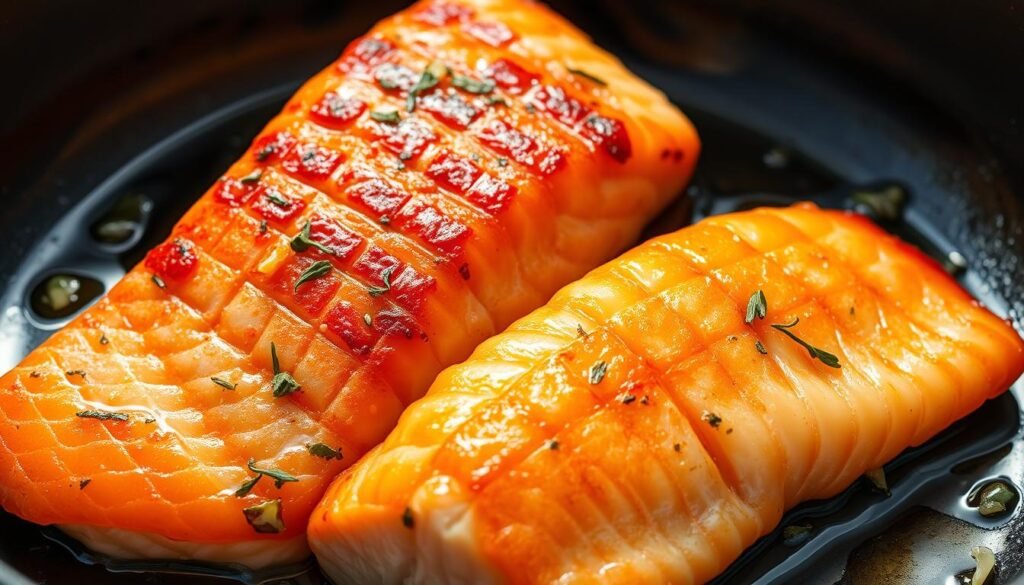
Steam under a lid, then sear skin-side down
I heat a skillet over medium and lay a square of parchment in the pan. I set the frozen fillet flesh-side down on the paper and cover with a lid.
Steam for about 6–8 minutes until the center loses its icy core. This par-cooks the flesh without splatter.
Use parchment to prevent sticking
Remove the fish and parchment, then crank the heat to medium-high. Add a thin layer of high-heat oil so the surface gets immediate contact.
Pat dry, high-heat oil, and press for crackly skin
I pat the fillet dry and season with a light sprinkle of salt and pepper. Then I return it skin-side down and press gently for about 20 seconds.
Sear for 2–3 minutes until the skin shatters and browns. Rest the piece 1–2 minutes off heat so juices settle.
Approximate timings and tips
- Steam: 6–8 minutes; sear: 2–3 minutes. Adjust with thickness and visual cues.
- This method shines with thinner cuts and tail pieces for extra-crisp skin.
- If finishing with sauce, spoon it over off heat to keep the skin crisp.
“Pressing briefly during the sear makes all the difference for shatteringly crisp skin.”
Seasoning, Sauces, and Simple Marinades I Use
The right finishing touch makes a big difference. I rely on two quick flavor paths that suit my schedule and gear. One gives sweet-savory caramelization and the other brings bright, tangy lift.
Brown sugar-soy glaze vs lemon-Dijon marinade
I brush the brown sugar-soy sauce after the brief thaw phase so sugars caramelize without burning. In the air fryer it sets into a glossy crust that tastes bold and balanced.
The lemon-Dijon mix is whisked in seconds and clings with a splash of oil. I use it for oven or air fryer methods when I want a fresher finish.
Salt, pepper, and oil basics for fillets and skin
Keep the prep simple: pat the fillet dry, season lightly with salt and pepper, and rub a thin oil layer. That helps browning and prevents the skin from steaming.
- Drain any pooled liquid mid-cook and re-brush sauce or oil for better color.
- When short on time I finish with a squeeze of lemon and a pat of butter off heat.
- I add fresh herbs at the end so the aroma stays vibrant across recipes and methods.
“Small prep moves—drying, light oil, and timed glazing—lift the final result every time.”
Cook Times, Thickness, and Doneness Guide
I treat cook time as a guideline: thickness, appliance choice, and a quick probe decide the final pull point. Short sittings in a hot air unit move faster than an oven, but both need a temperature check at the end.
Air fryer and oven cook time ranges for frozen salmon fillets
In my air fryer routine I plan a brief thaw burst of about 7–9 minutes, then another 7–9 minutes to finish. That two-step rhythm lets me separate pieces and glaze if I want.
For the oven at 375°F, expect roughly +8 extra minutes versus the air baseline for similar thickness. Oven baking gives batch control but demands spacing so pieces don’t steam.
Medium to well-done: 125–145°F and minutes vary
I aim for internal temperature targets: 125–130°F for medium, 130–135°F for medium-well, and up toward temperature 145 for well-done and FDA-safe finish. Minutes shift with thickness and appliance, so probe early.
Tail cuts vs center-cut fillets: how thickness changes time
- Tail pieces are thin and finish several minutes faster.
- Center-cut fillets need extra minutes and more probe checks.
- Wild fish often cooks quicker than farmed; start checking several minutes early.
“I always finish with a quick thermometer read and visual flake test.”
Conclusion
These techniques let a busy cook move straight from freezer to table without fuss and with reliable results.
I’ve laid out multiple methods — air fryer, oven baking, oven poach-then-bake, and a stovetop steam-then-sear — so you can pick the way that fits your gear and time. Watch for opaque flesh and use a quick-read probe; aim between 125–145°F for the texture you like.
Keep simple tips in mind: place frozen salmon in a single layer, give pieces space, drain pooled liquid, and pat dry before searing. Swap sauces like brown sugar-soy or lemon-Dijon, stock portions in the freezer, and you’ll have an easy, wholesome meal ready any night.