

I love a hands-off weeknight method that still delivers juicy hamburgers and a tidy stovetop. I share a simple, reliable recipe that uses a lined baking sheet and a few small tricks for steady results.
I usually bake 1/4-lb patties at 375 degrees for about 20–25 minutes until they hit 160°F, no flipping required. For faster browning, I bump heat to 400–425 degrees and pull the meat around 155°F for carryover cooking.
My go-to tips: press a thumb depression into each patty to stop doming, use a 90/10 ground blend for less grease, and line a sheet pan with aluminum foil plus parchment for easy cleanup. If meat is fatty, I set patties on a wire rack to drain excess grease.
Finish strong: add cheese in the final minute, and warm wrapped buns in foil for 2–3 minutes for soft, melty cheeseburgers. I also cover seasoning, timing, and topping ideas so dinner is complete and stress-free.
Key Takeaways
- Bake 1/4-lb patties at 375°F for 20–25 minutes to 160°F; no flip needed.
- Higher heat (400–425°F) gives better browning in ~12–15 minutes.
- Use foil + parchment on a baking sheet for no-scrub cleanup.
- Press a thumb dent, pick lean 90/10 blends, or use a wire rack for greasy patties.
- Add cheese in the last minute and warm buns wrapped in foil for 2–3 minutes.
Why I Bake My Burgers in the Oven
I love using this simple method because it keeps my kitchen cleaner and my hands free. Baking patties on a lined pan stops splattered grease and cuts cleanup time. There’s no flipping, so every hamburger keeps its shape and juices.
It’s a reliable weeknight recipe that scales well. I can cook four or a dozen at once and still serve everything hot at the same time. While the tray bakes, I finish toppings and a quick side without rushing.
At 375°F I get juicy results in about twenty to twenty-five minutes. If I want extra browning, I bump the heat or move the rack higher. For parties, I wrap burgers in foil and hold them hot without drying out.
“Less smoke, less babysitting, and steadier results — that’s why I use the oven.”
- Cleaner kitchen and no pan babysitting
- Hands-free cooking so toppings and sides get attention
- Works with different ground beef blends; use a rack for fatty mixes
What You’ll Need: Ground Beef, Seasonings, and Oven Tools
Choosing the right beef and gear sets me up for a no-fuss bake every time. I keep this kit simple so prep is fast and cleanup is easier.
Meat choices: I reach for ground beef in the 85/15 to 90/10 range. That ratio keeps patties juicy without excess grease. If I pick a fattier blend, I use a rack so fat drips away.
- I line a rimmed baking sheet fully with aluminum foil and top with parchment for no-scrub cleanup.
- A wire rack set over the sheet lowers grease contact and helps even cooking.
- I keep a digital thermometer on hand to verify doneness quickly.
- For seasonings I start simple—salt and pepper—or add dried onion, garlic, and crushed fennel for depth.
“A lined sheet pan and the right meat make bigger batches effortless.”
Practical tips: portion burger patties evenly, leave space between them on the sheet, and use medium-thick cheese slices for quick melting. With this setup I can scale up for a crowd and still serve consistent hamburgers from my oven.
Quick Prep: Seasoning and Shaping Burger Patties
Start strong: simple seasoning and gentle shaping make the difference. My prep routine takes just a few minutes and sets every batch up for even baking and juicy results.
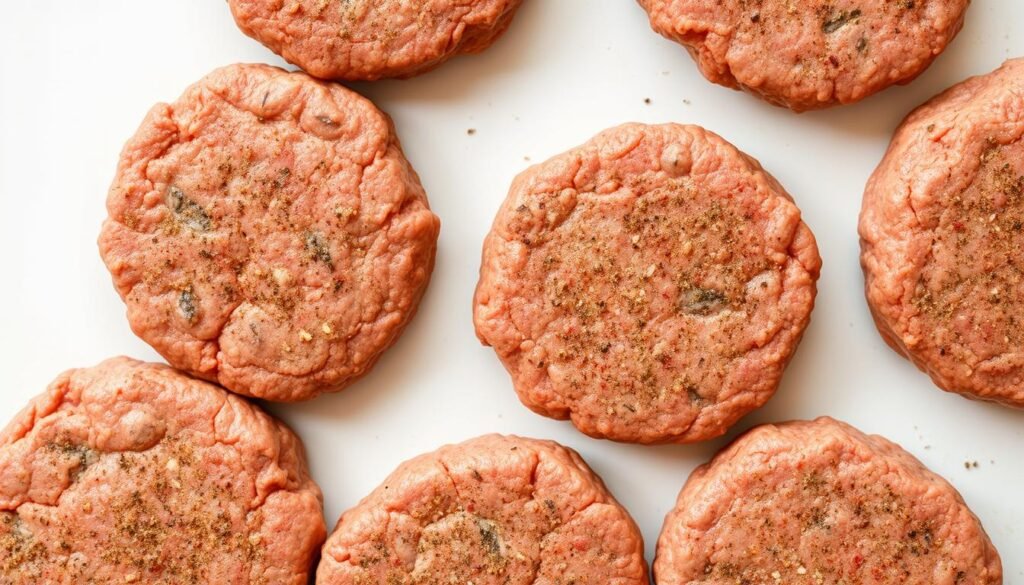
My simple salt-and-pepper base plus optional garlic and onion
I keep the seasoning straightforward. I sprinkle salt and pepper, then fold in a small amount of dried minced onion, dried garlic, or a pinch of crushed fennel for aroma.
Forming 1/4‑pound patties and the thumb depression
I handle ground beef very lightly so the meat stays tender. I divide the mix into even 1/4‑pound portions and form gentle patties.
- I start with a salt-and-pepper base, then add optional dried minced onion, dried garlic, and a pinch of crushed fennel.
- I avoid overmixing seasonings so the patty stays tender and cooks evenly.
- I press a centered thumb depression about 1 inch wide and halfway deep to stop doming.
- I season both sides just before baking and chill briefly if I prep ahead.
With this quick prep I can make burgers that hold their shape and finish at the same time. A little care here saves effort during cooking and keeps the burger juicy.
Oven Temperature and Timing for Evenly Baked Burgers
I pick temperatures based on whether I want fuss-free timing or a more caramelized crust. That choice guides how long I leave patties in the oven and where I place the rack.
When I use 375°F for hands-off weeknights
375 degrees gives a forgiving window. Eight 1/4‑pound patties usually hit 160°F in about 20 minutes and can take up to 25 minutes depending on thickness.
I leave space—about 2 inches—between patties so hot air circulates and cooking stays even.
When I go hotter (400–425°F) for more browning
For better crust I bump the oven to 400–425 degrees. Expect roughly 12–15 minutes until internal temps reach about 155°F; carryover heat brings patties the rest of the way.
If grease is heavy, I set patties on a rack over a lined sheet. The rack encourages drip-off and cleaner browning.
Typical bake minutes: 12–25 minutes, and why thickness matters
Thickness drives bake minutes. Thicker patties push toward the upper end of the range; thinner ones finish faster.
- I use a thermometer, not just the clock, and pull patties right at target temp to avoid overcooking.
- Factor a couple extra minutes for melting cheese or warming buns in foil.
- I never flip—the oven cooks both sides evenly and saves mess.
“Consistent portioning and spacing let me repeat results whether I cook four or a dozen burgers.”
Step-by-Step: how to cook burgers in the oven
Start by preheating the oven to 375°F. While it warms, line a rimmed baking sheet: wrap the pan in aluminum foil and top with parchment. This traps drips and makes cleanup nearly effortless.
Arrange patties with at least 2 inches between each one. Give hot air room to circulate so flipping isn’t necessary. Place the sheet on a middle rack for even cooking.
Timing and finish
I bake for about 20–25 minutes, checking internal temps. Pull patties at 160°F for safe, juicy results.
Add a single slice of cheese on top in the final minute and return the pan briefly for a quick melt. Move finished patties off the hot sheet so carryover cooking stops.
Serving and holding
Transfer patties to warmed buns right away, or build burgers and wrap each in foil to hold warm for 2–3 minutes while you get sides ready. This simple flow—preheat, line, space, bake, melt—keeps my process consistent and repeatable.
- I preheat the oven and ready a lined baking sheet with foil and parchment.
- Space patties so they cook evenly without flipping.
- Bake about 20–25 minutes at 375 degrees and melt cheese for one minute.
- Move burgers off the sheet and wrap if you need to hold them briefly.
Doneness, Thermometers, and Food Safety
A reliable thermometer removes the guesswork from doneness and keeps my hamburgers safe. I rely on numbers, not color, when I check beef. Ground beef is safe at 160°F, and that single number guides my timing and moves.
US-safe internal temp and carryover
At higher oven temps (400–425°F) patties can hit about 155°F in roughly 12–15 minutes. I often pull them at that point because carryover heat finishes them to 160°F without overbaking.
Reading 155–160°F correctly
I insert a digital probe horizontally into the center of the patty so the tip sits in the core and not the pan. I check the thickest patty first since it sets the pace for the rest.
- I follow the USDA guideline: 160°F internal temp for safe hamburgers.
- I remove patties from the hot sheet as soon as they hit my target to control carryover.
- I avoid cutting into a patty to check doneness; that spills juices and wastes time.
- If I cook multiple racks, I spot-check different spots because oven zones vary.
- Salt before baking won’t affect safety, but accurate temp checks do.
“I use time ranges only as a guide; degrees decide when a patty is done.”
Even with short cook time, consistent portioning and the right probe keep my cooking predictable and my burger juicy.
Cheese, Buns, and My Foil “Bun Trick” for Ooey-Gooey Results
A simple slice of cheese and a few minutes wrapped in foil transform burgers into crowd-pleasers. For cheeseburgers, I add a slice of American, cheddar, Swiss, Monterey Jack, or provolone in the final minute on the pan.
Two easy bun finishes: I toast cut side up under the broiler for a quick crisp top, or I build the sandwich and use a short steam in foil for soft, warm buns.
My foil wrap method
I assemble the patty with cheese, top it with any burger toppings I’ll add later, then wrap in aluminum foil. Heat for 2–3 minutes and the warmth melts cheese and softens the roll without drying the beef.
“The aluminum wrap creates a steamy pocket that melds cheese into the patty and keeps buns pillowy.”
- I favor American for classic melt, but cheddar, Swiss, Jack, or provolone work well.
- Melt cheese on the pan’s last minute, or inside the foil for extra ooze.
- I hold toppings off until after foil-warming so crisp veggies stay fresh.
- For gluten-free buns, this foil step softens texture and improves mouthfeel.
Toppings and Sides I Love with Oven Burgers
A quick toppings bar turns a tray of patties into a party without extra work. I set out classic choices and a few special add-ons so guests build their favorite burger fast.
Classic and creative burger toppings
I keep a basic spread: lettuce, sliced tomato, raw onion, pickles, ketchup, mustard, and mayo.
I often add sautéed garlic-butter mushrooms and oven-baked bacon for a savory upgrade.
For a twist, pineapple rings give an Aloha vibe that pairs well with teriyaki-style sauces.
Easy sides: fries, salads, and veggies while patties bake
While patties are baking for about 20 minutes at 375°F, I toss a quick veggie or fruit salad.
I also use a second baking sheet for fries or sweet potato wedges so everything finishes together and hot.
“Set crisp toppings aside until service so they stay crunchy on top.”
- I set out classic burger toppings for easy building.
- Sautéed garlic mushrooms and oven bacon add depth without extra pans.
- A second baking sheet handles fries so sides and burgers finish at the same minutes.
- Warm buns briefly while patties rest so the whole plate hits the table hot.
Cleanup, Storage, and Make-Ahead for Crowd-Pleasing Burger Bars
A few pan tricks make hosting simple and keep mess to a minimum. I line a baking sheet with aluminum foil and top it with parchment so cleanup is quick toss-and-done. This step saves serious time after service.
Reduce grease and sogginess by setting patties on a rack inside the sheet when I expect lots of drippings. The rack lets fat drip away and keeps bottoms firmer for build-your-own stations.
I assemble cheeseburgers ahead, wrap each in foil, and hold them in a low oven so guests get hot sandwiches on demand. I avoid high heat so buns stay soft and meat keeps its juices.

- I prep toppings chilled and bring them out just before serving for fresh contrast with warm hamburgers.
- Reheat wrapped portions at a gentle temp for a few minutes—this restores melt and moisture without drying.
- For large groups I use multiple lined sheets and rotate batches so fresh plates are always ready.
“Little prep and smart holding mean less pan scrubbing and more time with guests.”
Conclusion
This method makes repeatable, juicy results with simple prep: a lined sheet, good spacing, and a quick probe check. I rely on the 375°F / 20–25 minute window or a hotter 400–425°F blast for faster browning and carryover to 160°F.
Use 85/15–90/10 ground beef, season with salt and pepper, and keep aromatics light for extra flavor. A rack helps with fatty mixes and foil plus parchment makes cleanup painless.
I melt cheese in the last minute or use my foil bun trick for gooey finishes. This recipe scales well for weeknights or a crowd, and a thermometer keeps me from overbaking. Save this, and you’ll make burgers confidently every time.