
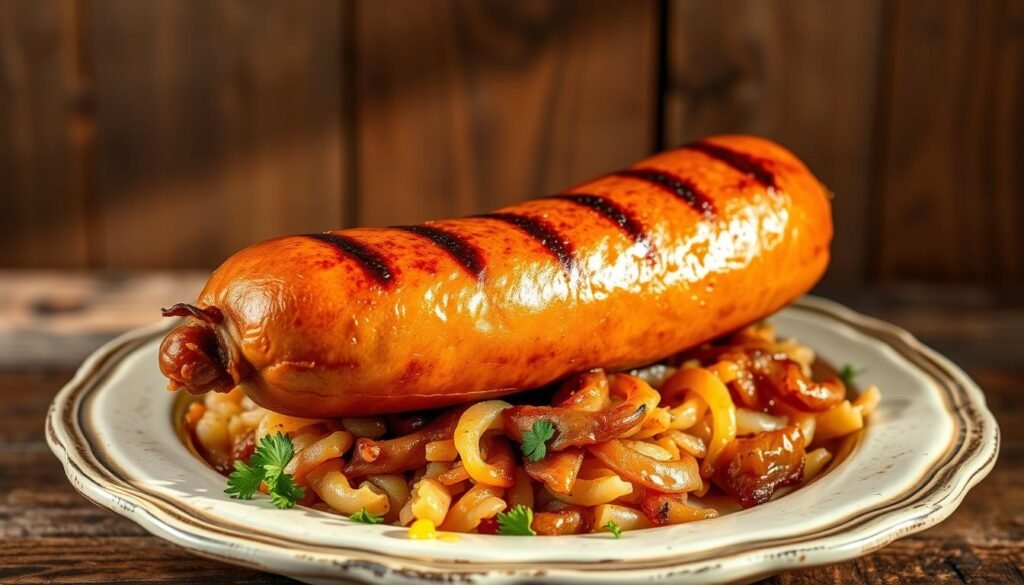
I make bratwurst simple and reliable for any weeknight dinner or tailgate meal. These German sausage links are usually pork, sometimes blended with veal or beef, and seasoned with marjoram, ginger, sage, cumin, nutmeg, coriander, and caraway.
My goal is practical: I show the best way to brown and finish bratwurst so you get a crisp casing and juicy center every time. A quick stovetop sear, a short steam with water, beer, or stock, then a finish that turns pan juices into a glossy sauce makes the dish feel complete.
I also include an oven route that mimics grill char for when barbecues aren’t an option. You’ll find exact temperatures, timing, and simple ingredients, plus serving ideas like mustard, sauerkraut, peppers, onions, and potatoes as classic sides.
Key Takeaways
- I explain what bratwurst is and the flavors you should expect.
- I share my go-to pan method for browned casings and juicy centers.
- An oven technique gives broiler char when the grill isn’t available.
- Clear temps, timing, and liquid choices (water, stock, or beer) make results repeatable.
- Serving and storage tips help you turn leftovers into a fresh-tasting meal.
Why this guide works right now
Football season and busy weeknights demand simple, reliable cooking that fits real life. I focus on methods that give char and a juicy center without long fuss. Whether you have a backyard grill or a small kitchen, this guide helps you deliver a winning meal.
When the weather or space limits grilling, an oven at 425°F plus a short broil creates great results in under 20 minutes. My stovetop brown-then-steam approach finishes in roughly 13–15 minutes. Both routes save time and make service predictable for a crowd or a quick dinner.
What I cover for a perfect weeknight dinner or tailgate
- I designed this guide for fast service so you can cook brats without babysitting the pan or grill.
- Two proven indoor methods—stovetop and oven—so you can pivot from grilling to baking or pan-cooking based on space and schedule.
- Realistic timings, exact gear (and swaps), and simple recipes that sync the main and every side.
- Practical tips for prep order, flavor options like onions and mustard, and steps that keep timing tight when feeding a crowd.
Safe internal temperature for bratwurst
Before plating, I always verify a precise temperature so the sausages stay juicy and safe. Pork-based bratwurst are fully cooked when they reach 160°F (71°C), the USDA guideline for this meat.
USDA guidance: 160°F (71°C) for pork brats
160°F is the target I aim for every time. Hitting that internal temperature keeps the sausage safe while preserving moisture. Timings can vary with size and method, but both stovetop brown-then-steam and oven 425°F-plus-broil routes aim for the same finish.
How I use an instant-read thermometer the right way
I slide my instant-read thermometer into the center from the side, not through an end. That gets the probe into the thickest spot and avoids touching the pan.
- I spot-check the fattest brat when cooking a batch.
- I check near the end rather than trusting minutes alone.
- If a link reads under 160°F, I return it to heat in short bursts and recheck.
A reliable thermometer is the fastest way to nail both safety and perfect texture every time.
How to cook brats: the quick answer
If you want a fast, reliable finish, I aim for a quick sear and a brief steam that locks in juice and flavor. This is the best way I use when I need consistent results.
My best way: brown in a skillet, then steam in liquid
I heat a slick of oil in a hot skillet and brown bratwurst 3–4 minutes per side. Then I add about 1/2 cup of water, stock, or beer, cover, reduce heat, and cook about 10 minutes until the center hits 160°F.
When the links reach temperature, I remove them and reduce the pan liquid with onions into a glossy sauce.
Fast oven method with a broiled finish
For a hands-off approach I preheat the oven to 425°F. I space links at least 1 inch apart on a rimmed, foil-lined sheet, bake 8 minutes, flip, bake 6 minutes, then broil 3 minutes. Check that they hit 160°F before serving.
- The skillet route takes about 13–15 minutes total and yields a quick pan sauce.
- The oven option is great for multiple links and mimics grill char with a brief broil.
- Either way, spacing and a short steam keep the meat juicy and on time.
This simple recipe works year-round, whether I’m making a single meal or feeding a crowd.
Cooking brats on the stove (skillet method with onions)
When I’m on stove duty, the skillet becomes my one-pan method for browning and saucing. It’s fast, forgiving, and leaves a pan sauce you can spoon over buns.
Brown then steam: why this two-step method stays juicy
I heat a cast-iron skillet over medium–medium-high with a drizzle of fat until it’s hot enough to brown but not smoke. I brown each bratwurst about 3–4 minutes per side to build a golden crust.
Liquids to use: water, stock, or beer (lager/pilsner)
Once browned, I tuck sliced onions around the links and pour in roughly 1/2 cup of liquid—water, stock, or a light lager/pilsner. Then I cover and reduce the heat so the sausages steam gently.
Turning the pan juices into an oniony sauce
“Keep the casings intact; that traps juice and prevents splitting.”
After about 10 minutes I check for 160°F, lift the links and raise the heat. I reduce the remaining liquid and onions until glossy, season, and serve. Lager keeps the sauce smooth; stock adds depth, and water works in a pinch.
- I brown first, then steam covered for about 10 minutes.
- I never poke the casings; intact skins hold the juices.
- I finish by reducing the pan liquid into a quick onion sauce.
Oven-baked brats at 425°F (with broil for char)
A hot oven gives me a hands-off route that still delivers browned casings and a grilled-like finish. It works great for batches and for when the weather rules out outdoor grilling.
Sheet pan setup and spacing
I preheat the oven to 425°F and line a rimmed sheet with foil for easy cleanup. A 9×13 dish or a cast-iron skillet works if I don’t have a rimmed sheet.
I space the links at least 1 inch apart so hot air circulates and the casings brown instead of steam. Watch for rendered fat pooling on the pan; that helps with browning but can also smoke if unchecked.
Bake, flip, then broil: timing that mimics grilling
I bake for about 8 minutes, flip the bratwurst, then bake another 6 minutes. After that I set the oven to high broil and place the pan on the center rack for roughly 3 minutes.
- Check the internal temperature — target is 160°F — and return any lagging sausages for a minute.
- If I add vegetables, plan for 20–25 minutes total because extra moisture slows browning.
- For buns, I slide them on the sheet for the last minute of broil to toast without another dish.
“High, dry heat at 425°F crisps the casings fast and keeps the meat juicy.”
Grilling brats vs. indoors: when to choose each way
I match method and moment: smoky char from the grill or steady indoor heat that gives control and a pan sauce.
I reach for the grill when I want a natural char and smoky flavor. That is perfect for tailgates and larger outdoor gatherings.
The oven at 425°F plus a short broil finishes many links evenly with minimal babysitting. It is my go-to when weather or space limits outdoor grilling.
I use a skillet when I want an oniony sauce and tighter control over browning and doneness. Skillet cooking makes caramelized peppers and onions easy.
- On the grill: manage flare-ups and move links to cooler zones to prevent bursting.
- Indoors: the oven or skillet gives predictable heat and nearly the same color and texture.
- Either way: I aim for 160°F inside and keep casings intact for maximum juiciness.
“Start on high heat for char, then move to gentler heat for a juicy finish.”
Time and temperature guide by method and size
I rely on a short, repeatable schedule that matches link size and method. Clear minutes and a target temperature make results predictable whether I use a skillet or the oven.
Stovetop basics: Brown each side about 3–4 minutes, add roughly 1/2 cup liquid, cover, then steam for about 10 minutes until the internal temperature reads 160°F.
Stovetop timing and notes
- I budget 3–4 minutes for the first side and 3–4 minutes for the second, then roughly 10 minutes covered for steam cooking time.
- Smaller links may need a check a minute early; larger or thicker links often run a couple extra minutes.
- Use about 1/2 cup liquid; too much slows minutes and softens the casing before browning.
Oven timing and pan options
Bake at 425°F: 8 minutes, flip and bake 6 minutes, then high broil 3 minutes to crisp the skins. Space links at least 1 inch on a rimmed sheet, a 9×13 dish, or a cast-iron skillet.
“Watch visual cues—deep golden brown and taut casings—and confirm the temperature rather than adding blind minutes.”
If you add peppers or potatoes, expect total oven time near 20–25 minutes. A quick log of minutes by brand and size helps me dial in future batches.
Ingredients and tools I actually use
I keep a short list of ingredients and a handful of tools that make each meal fast and dependable. These choices cut fuss and keep cleanup simple so the whole process feels repeatable.
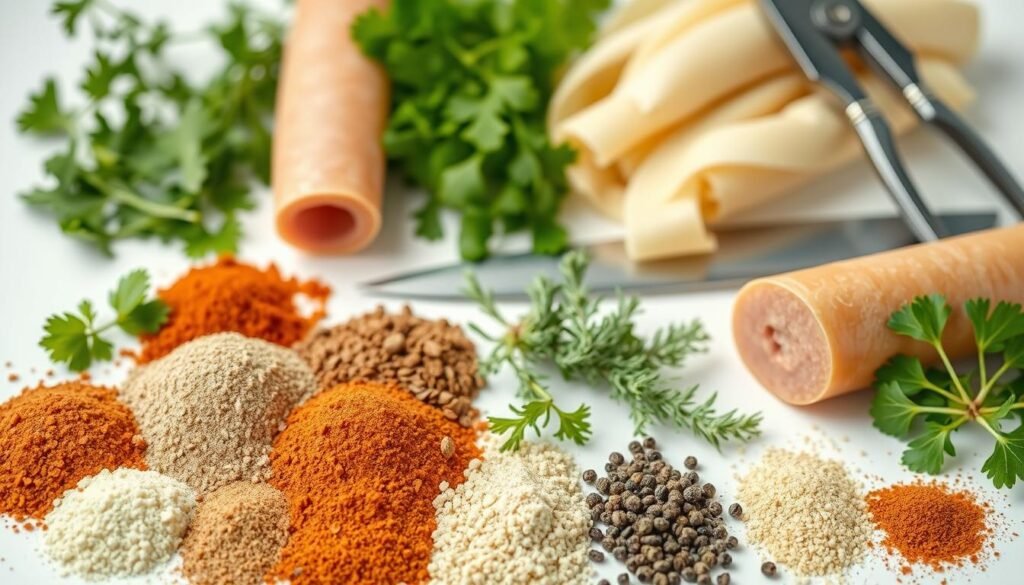
Bratwurst, onions, oil, and liquid
I buy good-quality bratwurst—Johnsonville or a local butcher’s links are my go-tos for texture and seasoning. I slice a red or yellow onion lengthwise so the pieces hold up while sautéing and simmering.
I keep about 1/2 cup of liquid ready: water, chicken or beef stock, or a light lager/pilsner. I start with a small amount of fat in the pan to encourage browning and help the onions caramelize.
Cast-iron skillet, rimmed sheet pan, lid, and thermometer
Tool choices matter. I prefer a cast-iron skillet for even browning, though stainless, carbon steel, or nonstick pans work well at moderate heat.
If the skillet lacks a lid, I cover it with a rimmed sheet pan as a simple swap. For the oven method I use a rimmed sheet lined with foil, or a 9×13 dish or cast iron if that fits better.
I keep a reliable instant-read thermometer on hand to verify 160°F without slicing into the sausages. That small check preserves juice and removes guesswork from the recipe.
- I buy quality links and slice onions lengthwise for durability.
- I keep 1/2 cup liquid and a small bit of fat ready for browning and steaming.
- I choose a skillet or a sheet-lined pan for easy cleanup, plus a thermometer for accuracy.
Step-by-step: beer brats with onions on the stove
This quick, single-pan recipe shows the sequence I use when I want browned casings, beer-scented onions, and a juicy finish.
Start by heating a 12-inch cast-iron skillet over medium–medium-high heat and add a light slick of oil. I sear the bratwurst sausage about 3–4 minutes per side until the links are nicely browned. Let them sit undisturbed so the crust forms.
Next, I tuck sliced onions into the pan and stir so they pick up the fond. The onions begin to soften and sweeten in the hot pan.
I pour in 1/2 cup lager or pilsner—if I don’t have beer, water or stock works fine. That liquid steams the links gently. I cover the skillet, lower the heat, and cook for roughly 10 minutes.
At the end I check the internal temperature; when it reaches 160°F the sausages are done and still juicy. I lift the brats out, crank the heat, and reduce the pan liquid with onions for 2–3 minutes until glossy.
- I return the links to the pan and roll them in the sauce.
- Season at the finish and serve immediately with mustard and buns or over potatoes.
- If you swap beer for water, the browned bits and onions still make a great sauce.
Common mistakes that ruin brats (and how I avoid them)
Mistakes that dry out links or scorch skins are almost always avoidable with a few simple rules. I focus on simple fixes that protect texture and flavor.
Overcooking or underbrowning
I watch the heat and the visual cues rather than guessing minutes. Too-high heat chars the outside while the center stays underdone, and too-low heat leaves the casing pale and soft.
For bratwurst and other sausages, I aim for a steady sear, then gentle finishing so the link reaches the right color and doneness.
Poking casings, crowding pans, and skipping the check
Don’t pierce the skin. Piercing lets juice escape and dries the meat. I manage heat and cover the pan if I need a short steam instead.
- I avoid cranking heat at the start; a controlled rise protects the crust and center.
- I leave space on the sheet or in the pan so links brown instead of steaming.
- I flip only at set intervals to build even color and keep the sear intact.
- I use an instant-read thermometer to confirm 160°F instead of guessing the temperature.
- I pour off excess fat, reduce sauces after the links rest, and season the sauce at the end.
“When in doubt, lower the heat slightly and add a minute—gentle cooking keeps brats juicy.”
What to serve with brats: buns, toppings, and sides
A well-chosen spread makes a simple sausage dinner feel like a celebration. I keep the setup easy so guests can build plates that match their taste. A few warm pans and a cold jar of mustard go a long way toward a fast, satisfying meal.
Mustards, sauerkraut, peppers and onions
I always offer at least two mustards. Stone-ground and Dijon are my staples. Warm sauerkraut adds bright acidity and cuts the richness of the meat.
- I serve stone-ground and Dijon mustard so guests can choose bold or smooth.
- Warm sauerkraut is a classic match with german sausage and brings tang.
- Peppers and onions sautéed in pan juices make an easy topping and a built-in side.
Potato sides: German potato salad, mashed, wedges
For starchy comfort I rotate German potato salad, creamy mashed, or crispy wedges. Each potato option pairs well with mustard and sauerkraut and adds heft on colder nights.
Simple salads and game-day add-ons
A bright arugula or cucumber salad balances the plate. For tailgates I add relish, ketchup, chili sauce, cheese sauce, and creamy coleslaw so everyone builds their own dish.
“Keep toppings warm and sides prepped ahead so service stays fast.”
Storing, reheating, and leftovers
I treat leftover meat like meal prep: label containers, note the date, and pick a reheating plan before service. This keeps flavor steady and keeps waste low.
Fridge and freezer guidelines: I refrigerate cooked leftovers in an airtight container for 3–4 days. For longer storage I freeze links up to 2 months. If frozen, I thaw overnight in the fridge rather than rushing at room temperature.
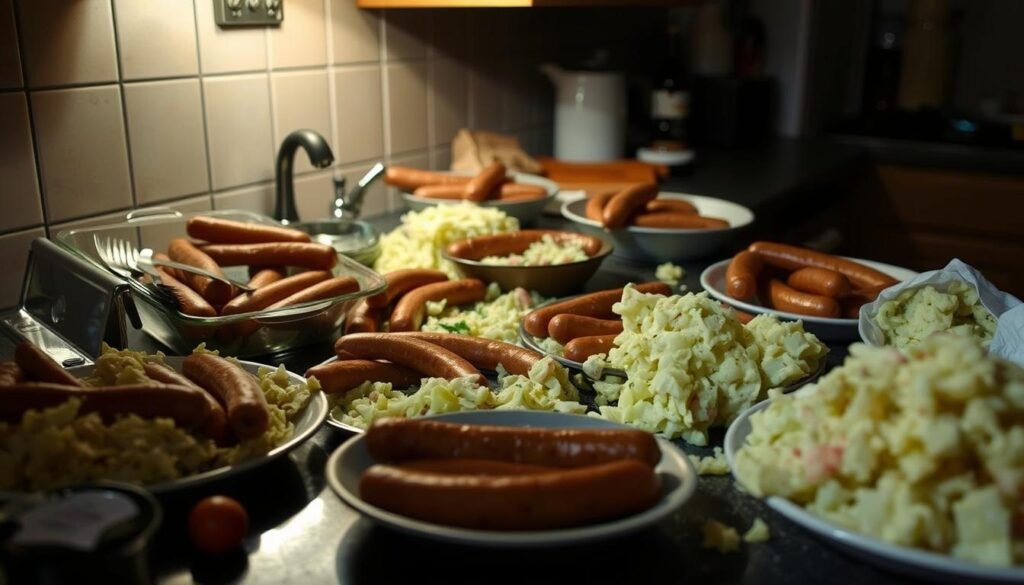
Fast reheats and gentle methods: For a quick fix, the microwave brings a single link to an eatable temp in about 1 minute—check and add seconds as needed. For better texture, I reheat in a skillet over low heat with a splash of water, stock, or beer. Covering the pan traps steam and keeps the casing tender.
- I use the oven at moderate heat for larger batches so I avoid another hard cook.
- I rehydrate leftover onions and sauce with a little liquid so the topping glosses over the sausages again.
- Refresh buns in the oven for a minute or two so the sandwich feels new.
“Gentle time plus moisture brings leftovers back without splitting or drying.”
Conclusion
Finish strong by focusing on temperature, spacing, and a quick pan sauce that ties the meal together.
I rely on two proven approaches—the skillet brown‑then‑steam and a 425°F bake plus broil—to make bratwurst that is juicy and browned. I always confirm a 160°F center with an instant‑read thermometer and avoid piercing the casings so flavor stays inside.
Space links, flip at set moments, and reduce pan juices into an easy sauce for serving with mustards, sauerkraut, or potato sides. Whether I’m grilling, baking in the oven, or using a skillet, the same fundamentals and time checks get consistent results.
Store cooked sausages for 3–4 days or freeze up to 2 months. Pick a method tonight and enjoy a reliable, crowd‑pleasing dish.