

I learned early that great black beans start with a simple, patient method. I cook from scratch so I can control texture and seasoning. The result is a creamy bean with a rich broth seasoned by cumin and garlic.
My go-to ratio is 4 cups water per 1 cup dried beans. Keeping the beans submerged helps them cook evenly and yields a silky cooking liquid you can use later.
I tested salting at the start and found it improved flavor without adding time. Freshness matters: stovetop simmer can take about 1 hour up to 2.5 hours, so I start checking at 60 minutes and then every 15 minutes.
I add kombu if digestion is a concern, but I keep the pot at a gentle simmer to avoid bitterness. I also save some broth when storing; beans last up to 5 days in the fridge or three months in the freezer.
Key Takeaways
- Use 4 cups water per 1 cup dried for even cooking and rich broth.
- Salt early for better flavor; timing does not increase.
- Start checking doneness at about 60 minutes; time varies with freshness.
- Add kombu for digestibility but keep a gentle simmer.
- Store with some cooking liquid: fridge up to 5 days, freezer up to 3 months.
Why I Love Cooking Black Beans from Scratch
Starting from dried beans lets me coax a deeper, more layered flavor into every pot. I choose black beans scratch because the broth becomes silky and useful as a side or sauce.
Skipping a soak often yields a creamier cooking liquid that I spoon over rice or save for soups. Salting the pot at the start boosted taste in my tests without lengthening the time, so I salt early and trust the result.
I build flavor with cumin, olive oil, and pepper, then add garlic late for brightness. A squeeze of lime and a sprinkle of cilantro or oregano at the end lifts the whole dish.
- I buy fresher dried beans when possible; age and hard water slow cooking.
- Cooking from scratch keeps sodium low and avoids processed ingredients.
- The results are versatile: a brothy side or a flavorful base for next-day meals.
How I Handle Times, Water, and Salt
I keep a simple water rule that helps every batch finish evenly and form a rich broth. I use 4 cups of water per 1 cup of dried black beans and top up so the beans stay submerged. For a full pound I cover by about 2 inches — roughly 10 cups of water — which makes a savory cooking liquid and prevents scorching.
Water ratios and when I add salt
I add salt at the start because it seasons inward without lengthening time. I measure with cups, keep a kettle of hot water nearby, and maintain a gentle simmer after I bring the pot to a boil.
Typical cook times: soaked vs. unsoaked
On the stove, soaked beans usually take about 45 to 60 minutes. Unsoaked beans need at least 60 minutes and can run up to 2.5 hours depending on age and hardness of water.
“If I forget an overnight soak, I quick-soak: bring the pot to a boil, turn off the heat, and let them rest for 1 hour.”
- I sort and rinse in a bowl first.
- I check doneness by mashing a bean between my fingers.
- I plan ranges rather than exact minutes and adjust heat as needed.
My Go-To Stovetop Method for Dried Black Beans
A clean, measured start—sorting, rinsing, and counting cups—sets up a successful pot on the stove. I combine 1 cup dried black beans with 4 cups water in a large pot or a Dutch oven so there’s room for a steady simmer.
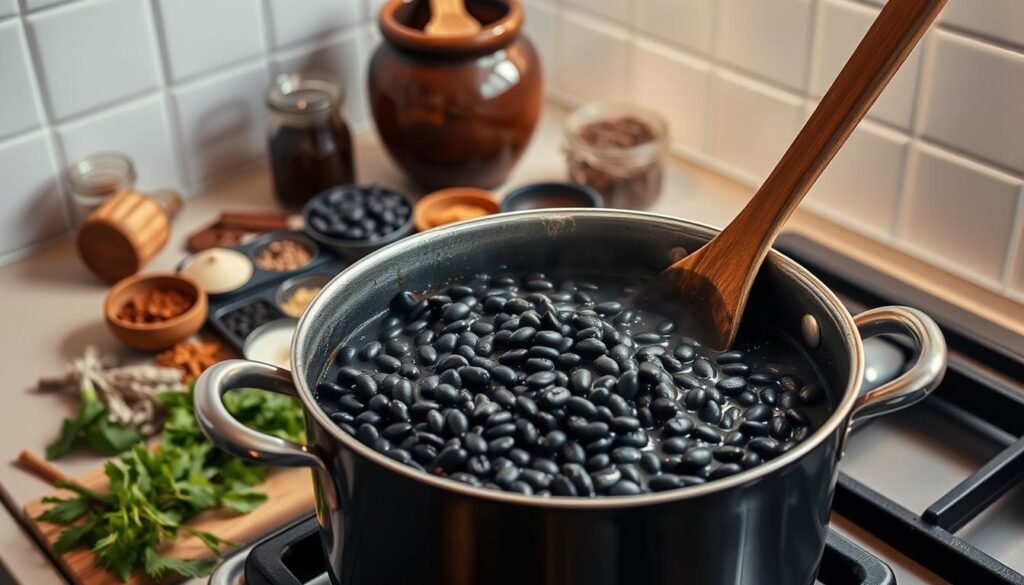
I bring the pot to a boil, then cut heat to a gentle burble and leave it uncovered. I add cumin, olive oil, salt, and pepper at the start with a bay leaf for base aroma.
I save grated garlic for the last few minutes so it stays bright. I watch the liquid level and add hot water as needed to keep the beans submerged and prevent scorching.
- I use a Dutch oven or thick-bottomed pot for steady heat retention on the stove.
- Check doneness at 1 hour, then every 15 minutes up to about 2.5 hours depending on bean age.
- Test by pressing a bean: tender and creamy with skins mostly intact is ideal.
- Finish with chili powder, Mexican oregano, and a squeeze of lime for brightness.
Tip: If a recipe wants drier beans, strain; otherwise cool them in their cooking liquid to keep texture glossy.
Should I Soak Beans? Pros, Cons, and My Approach
When I plan a pot, my choice to soak or not shapes the texture and broth. That decision guides my method and fits the dish I have in mind.
No-soak often yields a richer, silkier broth and firmer beans that hold well in tacos, enchiladas, and bowls. I reach for this when I want glossy liquid and intact pieces for plating.
No-soak for richness; soak for speed
I soak when I need shorter time and a very even texture. A 6–12 hour fridge soak cuts simmer time and helps beans cook uniformly.
Reliable quick-soak option
If I forget to plan, I bring dried beans to a boil, turn off heat, and let them rest for an hour before simmering. It saves enough time for a weeknight pot.
- I still add salt at the start whether I soak or not; age and water hardness affect tenderness more than salt timing.
- I pick a method based on recipe and schedule—no-soak for broth and soak for speed—so my batch work stays flexible.
Slow Cooker and Oven Methods I Trust
For hands-off batches, the slow cooker gives predictable heat and a forgiving finish. I use it when I want a deep, flavorful broth without standing at the stove.
Slow cooker timings: for soaked beans I set High for about 2–3 hours or Low for 4–5 hours. For unsoaked dried black beans I allow High 3–4 hours or Low 6–7 hours, sometimes longer if beans are older.
I always add salt, smashed garlic, and a bay leaf at the start. Midway I check liquid and top with hot water so the beans stay submerged.
Oven method in a Dutch oven: I preheat to 325°F. Soaked beans finish in about 75–90 minutes; unsoaked take roughly 85–95 minutes. The heavy lid traps moisture and gives a silky cooking liquid with minimal stirring.
“Keep the heat gentle and avoid a rolling boil; that helps prevent split skins.”
- I lean on a Dutch oven on the stove when I want quicker feedback from the pot.
- I use time ranges rather than exact hour marks and check tenderness by pressing a bean.
- Finish seasoning once the bean is tender and cool them in their liquid for glossy texture.
Flavor Boosters: Seasonings and Add-Ins I Reach For
A few small additions turn a plain pot into something lively and memorable. I season the cooking water early with cumin, olive oil, salt, and pepper so the base has depth as it simmers.
I tuck a bay leaf in at the start for a gentle herbal backbone. Near the end I stir in grated garlic so it stays sweet and aromatic instead of sharp.
I finish with chili powder and Mexican oregano when I want a cozy, bold profile that fits tacos, enchiladas, or burrito bowls. A bright splash of lime juice and a scatter of chopped cilantro wake the whole taste up.
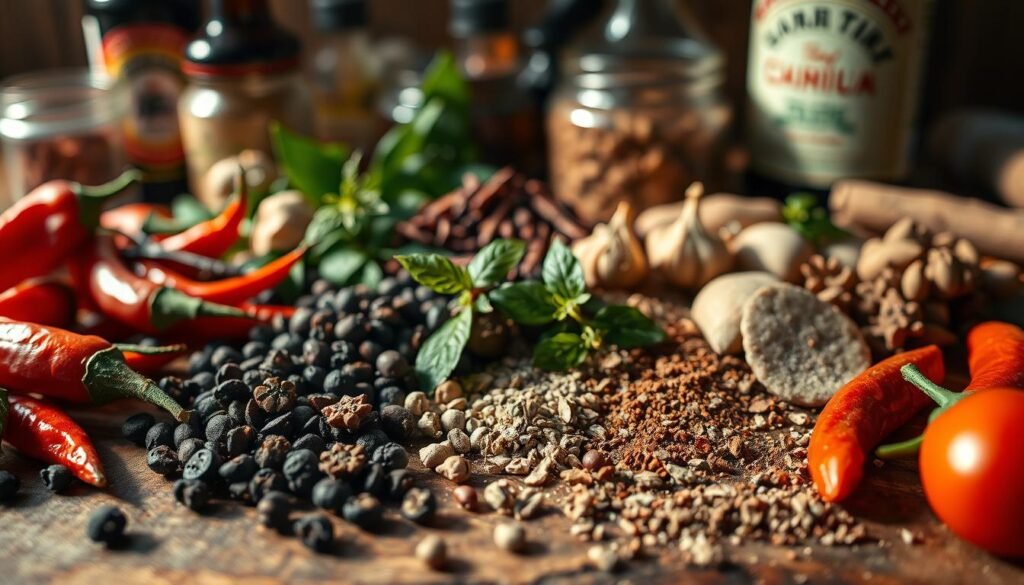
- Layer early: cumin, salt, and a bay in the pot let the beans absorb seasoning through the water.
- Finish bright: lime zest, fresh cilantro, and a final pinch of chili or paprika for balance.
- Digestibility trick: I sometimes add a 3-inch piece of rinsed kombu after the initial boil and keep a gentle simmer so it doesn’t turn bitter.
“Taste the cooking liquid as a checkpoint; if the liquid is delicious, the beans will be too.”
Cook Time, Texture, and Troubleshooting
I watch the pot closely because small changes in water or bean age can stretch a short simmer into a long one.
Age, water, and equipment variables
Older dried black may need far more time than fresh stock. Age and very hard water slow softening and make cooking uneven. I plan a wide range rather than an exact minute count.
I aim for a check at about an hour for unsoaked batches and at 45 minutes for soaked pots. Then I test every 15 minutes until the center is creamy.
Keeping beans submerged and preventing splitting
Keep the surface fully covered with hot water so the skins stay intact and the cooking liquid stays balanced. If tops peek out, I add a ladle of hot water.
Maintain a gentle simmer, not a boil. A steady burble prevents split skins and keeps texture even. I pick a dutch oven or heavy pot when I can; even heat reduces hotspots and odd doneness.
- I plan flexible time because bean age, water hardness, and pot thickness can add minutes or more than an hour.
- I test early—45 minutes for soaked, about an hour for unsoaked—then every 15 minutes until creamy.
- If beans steam dry, add hot water; cool them in their cooking liquid to preserve texture.
- Salt at the start, taste near the end when the liquid concentrates, and adjust seasoning.
- Consider a short soak for very old or dried black stock, though no-soak gives a richer broth when time allows.
“If a bean is chalky inside, keep simmering and add time in small increments.”
Storage, Freezing, and Handy Equivalents
A tiny bit of the cooking broth makes a big difference after the pot is done. I cool jars completely, then add about a quarter cup of liquid per portion before sealing. That small splash keeps texture glossy and flavors intact when the batch rests in the fridge.
Fridge and freezer guidelines
I store containers in the fridge up to one week and in the freezer up to three months. For jars leave headspace; for bags remove excess air so frozen portions stack flat.
Portioning and can equivalents
A 15-ounce can is roughly 1.75 to 2 cups of cooked black beans, so I portion that amount for easy swaps in recipes. A single recipe often yields about 2.5 cups with broth; doubling gives roughly five cups—about three cans.
- Cool completely, then seal with about 1/4 cup of liquid so reheated beans shine.
- Freeze in meal-sized packs; label with date and use within three months.
- Reheat gently on the stove with a splash of water if the liquid has condensed; stir until glossy and warm.
“I keep a couple of can-equivalent portions ready for busy nights—one weekend pot feeds weeks.”
Tasty Ways I Use Cooked Black Beans
Leftover beans stretch into bowls, stews, and quick spreads with just a few bright accents.
Everyday mains that shine: tacos, enchiladas, burritos, bowls, and a cozy black bean soup. I often split a batch—blend some for a silky soup and leave the rest whole for texture. A can-sized portion in the fridge makes weeknight meals effortless.
Everyday mains: tacos, enchiladas, bowls, and soups
- I build tacos with warm bean filling and a splash of cooking liquid for sauciness plus quick pickled onions for bite.
- Enchiladas get a seasoned bean layer with roasted veggies and chili-spiked sauce for a satisfying, protein-forward bake.
- I mash some into patties for black bean burgers, pan-searing until crisp and smoky.
Sides with bright lime and herbs
I spoon warm beans beside roasted vegetables and finish with lime zest, a pinch of oregano, and olive oil. I also toss them into grain bowls or salads for added fiber and staying power.
Tip: Keep can-equivalent portions ready; they bulk soups or chili without changing the recipe balance.
Conclusion
Consistency — in water, salt, and gentle simmering — became my kitchen rule. I use a 4:1 water-to-beans ratio, salt at the start, and low bubbles so the pot yields a creamy legume with rich flavor.
Stovetop times vary: soaked batches often finish in 45–60 minutes; unsoaked can need 60–150 minutes depending on age and water. For hands-off days I trust a slow cooker or a Dutch oven in the oven for steady results.
For storage, I portion about 1.75–2 cups per container (a can equivalent), add a splash of cooking liquid, and refrigerate up to a week or freeze up to three months. Pick the method that fits your schedule and season as you go — simple choices make a repeatable, delicious recipe every time.