


Cooking salmon to perfection can be tricky. But knowing the right cooking time and temperature helps a lot. When cooking salmon at 400°F, the thickness of the fillet matters. So does how well you like it cooked.
Whether you’re an expert chef or new to cooking, our guide has you covered. You’ll learn how long to cook salmon at 400°F. This way, your fish will always be cooked just right.
Key Takeaways
- Cooking salmon at 400°F requires attention to the fillet’s thickness.
- The ideal cooking time varies based on the desired level of doneness.
- Understanding the optimal cooking time ensures a deliciously cooked dish.
- Cooking salmon to perfection is achievable with the right guidance.
- Our guide provides the necessary steps for cooking salmon at 400°F.
Understanding the Perfect Cooking Temperature
To cook salmon perfectly, you need to know the right temperature. Cooking salmon at 400°F is a favorite among chefs and home cooks. It balances cooking the fish through and keeping it moist.
Cooking at 400°F gives a nice sear on the outside and keeps the inside tender and flaky. This temperature is great for quick cooking without losing flavor or texture.
Why 400°F is Ideal for Salmon
Cooking salmon at 400°F is ideal for several reasons. It locks in the salmon’s moisture, preventing it from drying out. It also cooks quickly, making it perfect for weeknight meals.
Cooking Methods Suitable for This Temperature
At 400°F, you can use many cooking methods for perfect salmon. Baking is popular because it cooks evenly and keeps moisture in. Grilling adds a smoky flavor and a nice char on the outside.
Choosing any method at 400°F ensures your salmon is delicious and satisfying. Try different seasonings and marinades to boost the flavor of your salmon.
Factors That Influence Cooking Time
To get perfectly cooked salmon, knowing what affects cooking time is key. Cooking salmon can be easy if you know what to watch for.
Thickness of the Salmon Fillet
The thickness of the salmon fillet is very important. Thicker fillets need more time to cook, while thinner ones cook faster. A good rule is to cook salmon for 4-6 minutes per half inch of thickness.
For example, a 1-inch thick salmon fillet cooks for about 8-12 minutes at 400°F. Always keep an eye on the salmon as it cooks, as times can vary.
Type of Salmon Being Cooked
The type of salmon you’re cooking also matters. Different salmon types cook at different rates. For example, Atlantic salmon is fattier and cooks differently than leaner types like Sockeye or Coho.
Knowing the salmon’s specific traits helps you adjust cooking time. This ensures your salmon is cooked just right.
Cooking Salmon in the Oven
Cooking salmon in the oven at 400°F is a favorite method for tender and tasty results. It ensures even cooking and keeps the salmon moist. This makes it a top choice for preparing this healthy fish.
Steps to Bake Salmon at 400°F
To bake salmon at 400°F, first preheat your oven. Line a baking sheet with foil or parchment paper for easy cleanup. Place the salmon fillet on the sheet.
Season the salmon with your favorite herbs and spices. Or marinate it before baking for extra flavor.
Preheating the oven is key for even cooking. Once hot, put the salmon on the baking sheet. The cooking time depends on the salmon’s thickness and how done you like it.
Recommended Cooking Time
The recommended cooking time for salmon at 400°F changes with the fillet’s thickness. A 1-inch thick fillet cooks for 12-15 minutes. Always check if the salmon is done by using a fork or a meat thermometer.
For exact cooking, aim for an internal temperature of 145°F. A meat thermometer ensures the salmon is cooked just right without being overcooked.
Cooking Salmon Fillets vs. Whole Salmon
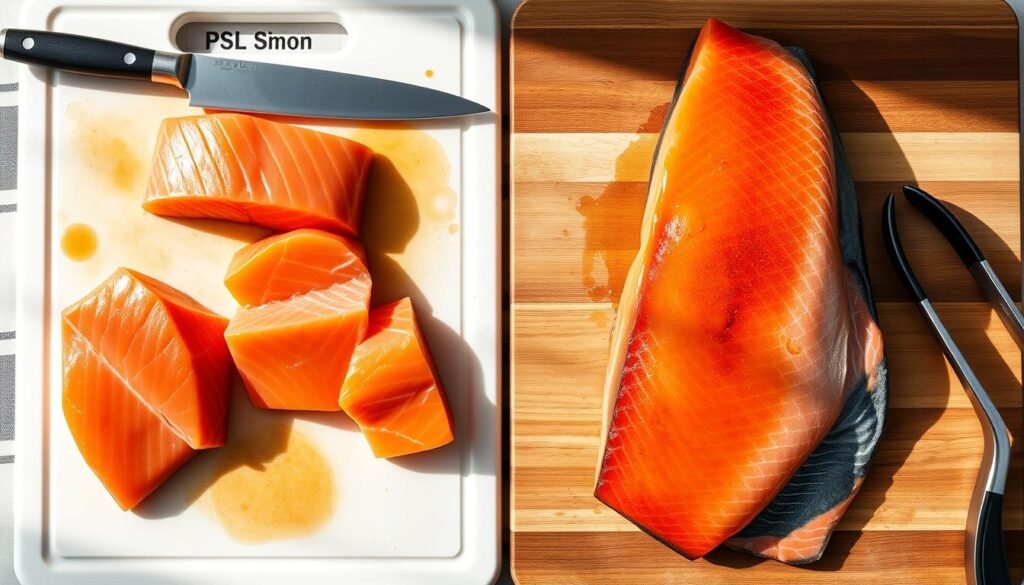
Choosing between salmon fillets or whole salmon is key. It changes the cooking time, flavor, and texture. The form you pick greatly affects the cooking process.
Cooking salmon fillets is easy. They are thinner and more even, making cooking consistent. Whole salmon, being larger, needs more time and effort to cook evenly.
Differences in Cooking Time
Fillets cook faster than whole salmon. At 400°F, fillets are ready in 12-15 minutes. Whole salmon, depending on size, can take 30 minutes to over an hour.
Adjust your cooking time based on the salmon form. Whole salmon needs longer cooking. But, make sure it’s cooked through to the center.
Tips for Cooking Whole Salmon
Cooking whole salmon is a bit tricky. But, with the right tips, you can make a tasty dish. Season the inside and outside well. Stuff the cavity with lemon slices and herbs for extra flavor.
To cook evenly, score the skin and use a thermometer. Cooking at 400°F can give you a great exterior and tender interior.
Checking for Doneness
To enjoy perfectly cooked salmon, it’s key to check for doneness the right way. Whether you’re a pro in the kitchen or just starting, knowing how to tell if your salmon is cooked is crucial. It can greatly improve your meal’s quality.
Visual Cues for Perfectly Cooked Salmon
One easy way to see if your salmon is done is by looking at it. Perfectly cooked salmon should flake easily with a fork. If it doesn’t flake, it might not be fully cooked. Also, the salmon’s color changes from translucent to opaque when it’s cooked.
You can also check by gently pressing on the salmon. If it feels firm and springs back, it’s likely done.
Using a Meat Thermometer
For a more precise way to check doneness, use a meat thermometer. The internal temperature of cooked salmon should reach 145°F (63°C) to be safe to eat. To use a meat thermometer, insert the probe into the thickest part of the salmon fillet, avoiding bones or fat.
This method ensures your salmon is not only tasty but also safe to eat. By using both visual cues and a meat thermometer, you can cook salmon perfectly every time. Whether you’re cooking fillets or a whole salmon, these methods will help you check doneness with confidence.
Enhancing Flavor and Seasoning
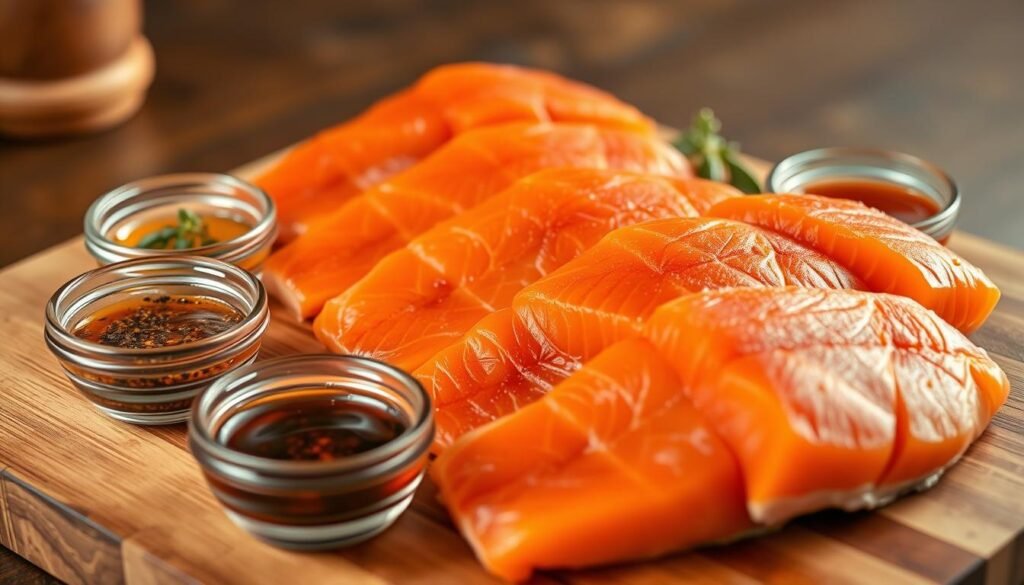
Enhancing salmon flavor is an art. It involves the right mix of marinades and seasonings. To get a tasty salmon, you need to know the different ways to boost its natural taste.
Popular Marinades for Salmon
Marinades are key in adding flavor to salmon. A mix of olive oil, lemon juice, and herbs like thyme and rosemary is popular. You can also try Asian marinades with soy sauce, ginger, and garlic for a unique taste.
Great marinades have acidic parts like citrus or vinegar, oils for moisture, and spices for depth. Trying out different mixes can help you find your favorite marinade.
Simple Seasoning Tips
Seasoning is another way to make salmon taste better. Use salt, pepper, and herbs and spices to add flavor. Citrus zest or grated ginger can also add a burst of taste.
Season your salmon well, as some seasoning may cook off. Mixing seasonings into the marinade can also enhance flavor.
By using the right marinades and seasonings, you can make your salmon taste amazing. It will be a dish you’ll remember.
Cooking Salmon on a Baking Sheet
Cooking salmon on a baking sheet is easy and clean. It ensures even cooking. To get the best results, prepare the sheet well and cook the salmon for the right time.
Optimal Prep for Baking
First, preheat your oven to 400°F. While it heats up, line your baking sheet with parchment paper or foil. This makes cleanup simple and prevents salmon from sticking.
Then, put your salmon fillet on the sheet. Season it with your favorite herbs and spices. Leave some space around the salmon for even cooking.
Recommended Baking Times
The baking time depends on the salmon’s thickness. Generally, bake for 12-15 minutes per inch of thickness. So, a 1-inch thick fillet bakes for 12-15 minutes.
To check if it’s done, flake the salmon with a fork. If it flakes easily, it’s cooked. Or, use a meat thermometer to check the internal temperature. It should be 145°F for safety.
Grilling Salmon at 400°F
To get perfectly grilled salmon, preheat your grill to 400°F. This temperature adds a smoky flavor and a nice char to the fish.
Setting Up Your Grill
Before grilling, set up your grill right. Preheat your grill to 400°F. Also, clean and oil the grates to prevent sticking.
You can use a gas or charcoal grill. Just make sure it’s preheated to 400°F. For a gas grill, turn the dial to 400°F. For charcoal, adjust the vents to get the right temperature.
Timing for Grilled Salmon
The cooking time for salmon depends on its thickness. Grill for 4-6 minutes per side, or until it’s 145°F inside.
For a 1-inch thick fillet, grill for 4 minutes per side. Thicker fillets need 1-2 minutes more per side. You can also use a meat thermometer to check if it’s done.
Health Benefits of Salmon
Salmon is a food full of nutrients that’s good for your health. You can add it to many dishes. It’s packed with nutrients that help keep you healthy.
Nutritional Value
Salmon is high in protein, vitamins, and minerals. It’s a great source of vitamin D, selenium, and omega-3 fatty acids. These are key for a healthy heart.
Adding salmon to your meals is a smart choice. You can bake, grill, or pan-fry it to keep its nutrients.
Omega-3 Fatty Acids Explained
Omega-3 fatty acids are found in salmon. They fight inflammation, boost heart health, and help your brain work better.
Eating salmon can lower heart disease risk and improve brain function. It’s a big plus for your health.
Delicious Salmon Recipes to Try
Salmon is great for many dishes, from quick meals to fancy recipes. You can try different flavors and cooking ways. This makes it easy to find a salmon recipe that you’ll love.
Simple yet Flavorful Dishes
For a fast and tasty salmon dinner, bake fillets with lemon, olive oil, and herbs. Or, mix cooked salmon with veggies and a tangy dressing for a salad.
Gourmet Ideas for Special Occasions
Want to wow your guests? Try a salmon Wellington with puff pastry, spinach, and feta. Or, grill salmon and serve it with a citrus-herb sauce.
These recipes highlight salmon’s versatility. They’re sure to impress anyone. Try new seasonings and cooking methods to discover your favorite salmon dish.

















One Response