


I love a simple, elegant main that feels special without fuss. Cornish hens are small birds, about 1–2 lb, and they roast like chicken. I walk you through my full plan so the recipe is easy to follow.
My method starts with patting the birds dry and seasoning inside and out with a dry rub of salt, pepper, Italian seasoning and smoked paprika. I build a bed of rosemary, thyme, garlic, onion and lemon, drizzle with olive oil, and roast at 425°F.
I use an instant‑read thermometer and aim for 165°F in the thickest part. After a 15–20 minute rest, I slice each bird in half for tidy servings. This gives crisp skin and juicy meat in one hour of total time.
I also call out tools and ingredients up front: a roasting pan, a small bowl for the rub, and the thermometer. I note storage tips for leftovers and simple variations you can try if you want even cooking or a gentler roast.
Key Takeaways
- Small birds roast quickly and make an elegant dinner for weeknights or a holiday.
- Season well, build aromatics under the birds, and roast at 425°F for crisp skin.
- Check doneness with an instant‑read thermometer at 165°F.
- Rest 15–20 minutes, then slice each half for neat servings.
- Use a bowl to mix the rub and keep leftovers 3–4 days in the fridge.
Why I Love Cooking Cornish Hens for Dinner or the Holidays
Tiny roasters give me big flavor with minimal carving and time. A cornish hen is simply a small chicken, usually 1–2 pounds, which means faster roasting and natural portion control.
I serve whole birds when I want drama, especially the smaller ones. They look impressive on a platter and make a festive holiday centerpiece.
I often split a larger bird after it rests. Halving creates tidy servings with a breast and a leg on each plate. That keeps portions fair and makes passing plates simple.
Why size matters
- Small size lets seasoning, garlic, herbs, and onion aromatics reach every part quickly.
- Two small birds fit the oven and take fewer minutes than a big roaster, which helps on busy days.
- I pick a roomy pan when I want extra browning and easy serving of pan juices.
Ingredients and Tools You’ll Need for Roasted Cornish Hens
Before I preheat, I gather every ingredient and tool so the prep flows without a hitch. This keeps the kitchen calm and speeds the work.
Pantry and fresh ingredients: 2 whole cornish hens (about 1½ lb each), 2 tbsp olive oil, 6 garlic cloves, 1 large onion (quartered), 1 lemon (sliced), and a few rosemary sprigs or other fresh herbs. Quartered onion and lemon form a fragrant bed that browns and flavors the pan juices.
- Dry rub basics: 1 tsp salt, 1 tsp pepper, 1 tbsp Italian seasoning, 2 tsp smoked paprika, 1 tsp garlic powder, ¼ tsp red pepper flakes. Use a small bowl and mix with a teaspoon and a tablespoon so the blend is even.
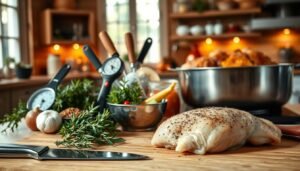
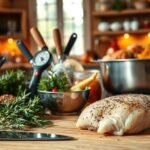
- Gear checklist: 9×13-inch baking pan or roasting pan, kitchen shears, instant‑read thermometer, mixing bowls. A small bowl is handy for tossing aromatics with a drizzle of olive.
I keep optional add-ins nearby (Old Bay, extra garlic powder). That lets me tailor the recipe and stay relaxed while roasting.
Prep Like a Pro: Pat Dry, Season Generously, Preheat the Oven
A crisp, golden finish starts before the birds hit a hot oven. I set my racks, clear the counter, and give myself a few extra minutes so the oven reaches the right temperature.
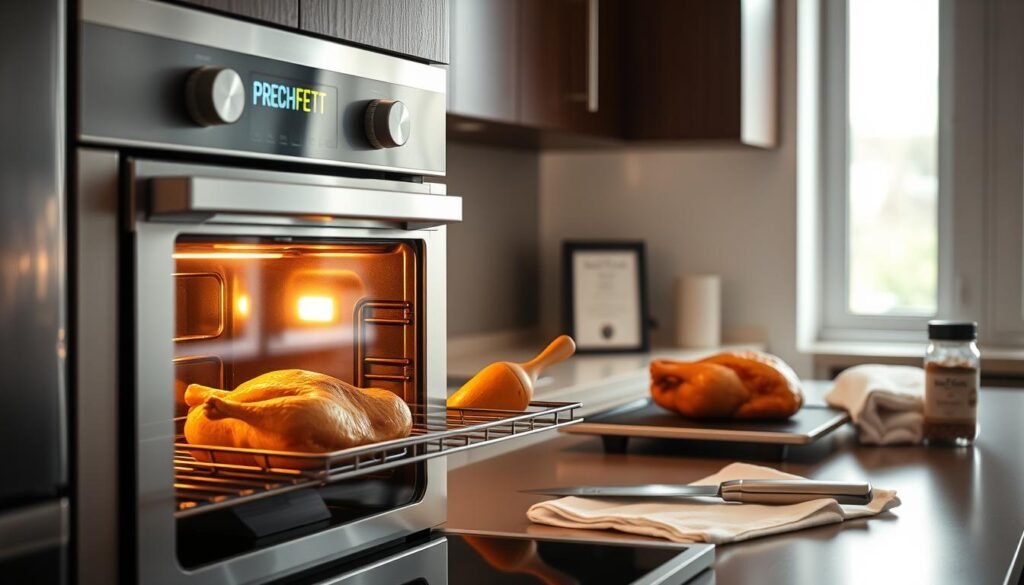
Patting the skin dry is the single easiest move for crisp skin. I use paper towels and press gently until the skin feels almost taut. Then I lift the skin slightly at the breast and slide a pinch of seasoning between skin and meat.
I mix the dry rub in a small bowl so salt, smoked paprika, and Italian seasoning blend evenly. I season inside the cavity and all over the skin, keeping garlic powder light so it won’t scorch at high heat.
Oven temp options and timing
- 425°F: Classic roasted finish—best for quick browning and crisp skin. Allow a full preheat so the time estimate holds.
- 375°F: A gentler roast that balances tenderness and color.
- 350°F: Use when spatchcocking and searing first; lower heat helps even cooking after a pan sear.
I drizzle a little olive oil so the spices cling and the skin browns without constant basting. That rhythm—dry, season, oil, preheat—keeps the kitchen calm and the timing predictable.
How to Cook Cornish Hens: The Core Roasting Method I Rely On
I build a savory base of herbs and citrus that perfumes the oven and the meat. For a reliable roast, I scatter rosemary and thyme sprigs, smashed garlic, onion quarters, and lemon slices across a sturdy roasting pan to form that fragrant bed.
Set the birds on the aromatics, drizzle 2 tbsp olive oil, and slide the pan into a fully preheat oven at 425°F. Plan for 50–60 minutes of cooking time, with the rack centered for even browning.
- I check the thickest part of the breast or thigh with an instant‑read thermometer and look for 165°F.
- Watch the skin in the final minutes; a light brush of olive helps any pale spots brown.
- After pulling the birds, rest them 15–20 minutes so the juices redistribute before slicing.
Finish with a pinch of salt and pepper and spoon the pan juices over each portion. That little step brightens the flavor and keeps the meat wonderfully juicy.
Spatchcocked (Butterflied) Cornish Hens for Even Cooking
Flattening the bird makes timing predictable and the skin crisp across the whole surface. I set each hen breast‑side down and use sharp kitchen shears to cut along both sides of the backbone, then remove it in seconds.
Press the breastbone firmly until the bird lies flat. That gives even contact with the pan and steadier roasting in the oven.
Using kitchen shears and a quick sear
I sometimes sear skin‑side down in a hot skillet with a little oil for 3–4 minutes. This jump‑starts browning and helps crisp the skin before a gentle 350°F roast.
Timing and target temps
Roast the flattened birds at 350°F for about 45–50 minutes. Check the thickest part in both the thigh and breast, avoiding bone, and look for 165°F.
- I arrange flattened hens with space around them on a pan so air can circulate.
- Save the removed backbone for quick browning if you plan a pan sauce.
- Rest briefly, then slice across the center for tidy servings.
Stuffed and Herb‑Forward Variations to Boost Flavor
I stuff each hen cavity with a pat of butter and a small bundle of fragrant herbs so the meat steams with green notes from the inside out. I add a thin lemon slice and a quick squeeze of juice for brightness.
Seasoning matters: I rub the skin with a light film of olive oil and a teaspoon of the dry blend so salt and pepper cling and brown evenly during roasting. If I plan to pour a splash of white wine into the pan, I do that aside from the birds so aromatics lift the juices without soggy skin.
When the skin browns much faster than the meat cooks, I tent loosely with foil. That shields color while the thigh reaches 165°F. After a 15‑minute rest, I spoon the pan juices over each portion for instant sauce and extra flavor.
- Stuff cavity with sage, rosemary, thyme, butter, and a squeeze of lemon.
- Arrange extra rosemary and sage sprigs under the birds to build an herb bed.
- Finish with a pinch of salt and cracked pepper before serving.
Doneness, Food Safety, and Timing Made Simple
My goal is a safe, juicy roast with crisp skin and no guesswork. I start by probing the thickest part with an instant‑read thermometer and avoid touching bone so the read is accurate.
Target temperature: 165°F. Whole birds at 425°F usually need 50–60 minutes. If you roast at 375°F plan about 45–60 minutes. Spatchcocked birds at 350°F take roughly 45–50 minutes, since the increased surface area speeds cooking.
Carryover cooking can raise the internal temp after the oven, so rest the birds 10–20 minutes before slicing. That keeps juices in the meat and the skin intact.
- I probe the thickest part and, for larger birds, check both thigh and breast so the entire bird reaches 165°F.
- Watch browning but remember color and crisp skin are not proof of doneness—temperature is.
- Rotate the pan if your oven has hot spots, and use a clean plate and tongs for finished hens to prevent cross‑contamination.
White Wine Pan Sauce and Drippings: Easy, Elegant Finishes
The fond left in the pan is flavor gold. I use the same roasting pan so every browned bit becomes part of the sauce. That makes a simple finish that lifts roasted cornish hens without fuss.
Deglaze, reduce, and finish
Start by browning any reserved backbone in the pan, then add a splash of olive oil if it looks dry. I sauté shallots or a quartered onion until tender, then add garlic for one fragrant minute.
Next I deglaze with ½ cup white wine and ½ cup chicken broth. Let the liquid bubble and scrape the fond, then reduce by about half in a few minutes. Strain for a silky texture.
- Whisk in 2 tbsp unsalted butter—sometimes just a tablespoon—to give the sauce a glossy finish.
- Fold in chopped rosemary or other fresh herbs and a squeeze of lemon if I used citrus under the hens.
- Stir in any pan juices from the roasting pan for added depth, then taste and season.
I keep the sauce warm in a small bowl and spoon it over each portion at the table. This light pan sauce takes minutes and makes an everyday recipe feel special.
Serving Ideas, Sides, and Leftovers I Love
After a short rest, I slice each bird in half for tidy plates and even servings. I cut straight down the breastbone so every plate gets both white and dark meat.
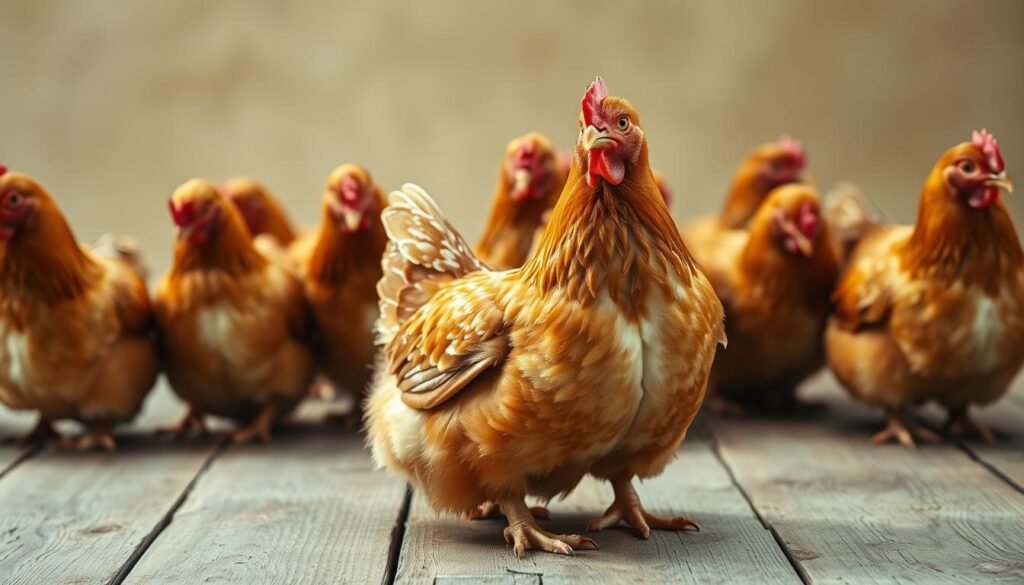
Slicing and plating
I halve each hen and arrange the halves on a warm platter. That keeps portions fair and looks polished when I bring the pan to the table.
Side dish pairings
- Creamy mashed potatoes for comfort.
- Simple green beans tossed with lemon and butter.
- Classic dressing warmed in a small pan alongside the birds.
Storing and reheating
Leftovers: Chill promptly in airtight containers and keep in the fridge 3–4 days or freeze up to 1–3 months.
I reheat gently in a skillet with a splash of reserved pan drippings to protect the skin. Another quick method is the oven at 350°F for 15–20 minutes with a bit of broth in the roasting pan.
“Halved portions reheat more evenly in fewer minutes, which keeps the chicken tender and juicy.”
Quick lunch trick: Slice leftover meat over a warm bowl of grains and vegetables for an easy, balanced meal.
Conclusion
A simple formula—good ingredients, balanced seasoning, and steady heat—lets me consistently roast cornish with confidence.
I rely on an herb‑and‑citrus bed of rosemary sprigs, onion, lemon and garlic, a teaspoon‑and‑tablespoon dry rub of salt and pepper, and a light sheen of olive oil so the skin browns and the breast stays juicy.
Trust temperature over minutes: probe the thickest part, rest briefly, then half each bird for tidy servings. Use the roasting pan drippings for a quick white wine pan sauce and the kitchen will feel effortlessly elegant.
Save this method with your favorite herbs and ingredients—the recipes that follow will reward simple swaps and make these hens a repeatable dinner or holiday favorite.









One Response