

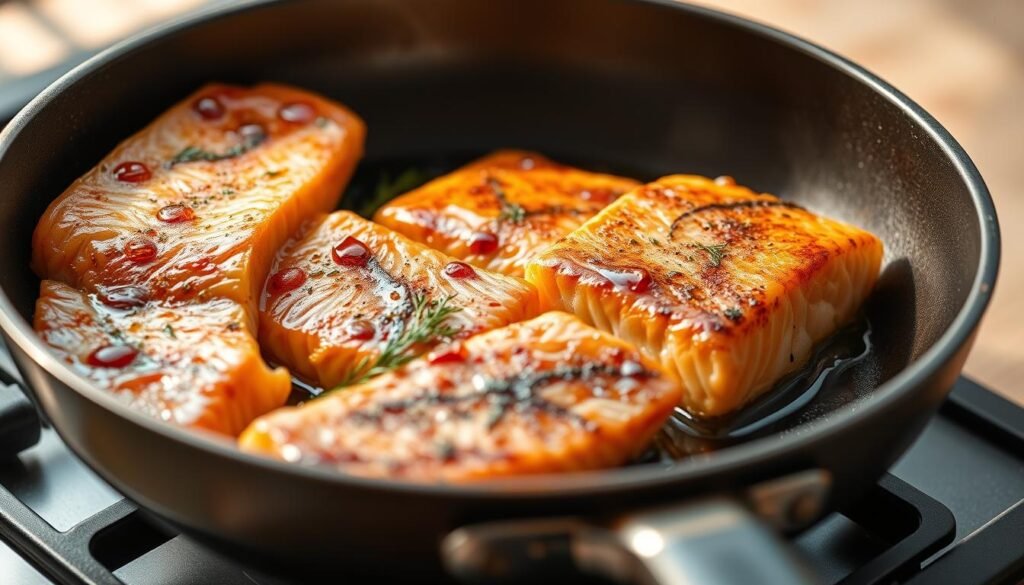
I’ll walk you through my simple, reliable method that turns a weeknight into a restaurant-style meal. This intro gives clear information you can use right away.
I focus on small, useful details I use at home. I show which pan and oil I pick and the seasoning I trust. You’ll learn the technique that builds a golden crust with a juicy center.
This recipe is repeatable and forgiving. You’ll see how to check doneness, avoid sticking, and get consistent results even on busy nights. My goal is to make this the go-to way for perfectly cooked salmon without stress.
Key Takeaways
- I share a clear method that fits busy evenings.
- You’ll know the right pan and oil to use.
- The technique gives crisp edges and a juicy center.
- Simple checks help you avoid overcooking.
- This recipe becomes a reliable home favorite.
Why pan-seared salmon works at home right now
Pan-seared fillets bring restaurant flair to weeknights with very little fuss.
I reach for this method when I want a fast, elegant meal. In about 10–15 minutes you can get a golden crust and a tender center. I use roughly 6-ounce portions; they sear quickly and stay moist.
The technique is simple: season well, heat oil until it shimmers, then let the fish cook undisturbed to build that crust before flipping and finishing.
- Quick and reliable: It fits busy nights and feels special.
- Chef-friendly: The high-heat sear mirrors how kitchens treat meat and scallops.
- Flexible: Works in nonstick or cast-iron, scales for two or a small group.
- Versatile: Easy to pair with simple sides or fold into other recipes later.
That crisp exterior and juicy interior are why I keep this way in my regular lineup. It gives maximum payoff for minimal time, right at home.
Ingredients and tools for perfectly cooked salmon
A tight kit of ingredients and tools makes this recipe foolproof.
Start simple: I use 6-ounce salmon fillets so the interior cooks through while the exterior crisps. Season each piece with a generous pinch of kosher salt and a few turns of black pepper.
Essentials
- I heat extra-virgin olive oil in a 12-inch nonstick or well-seasoned cast iron skillet until it shimmers.
- A thin fish spatula slips under fillets and preserves that brown crust when I flip them.
- A quick-read thermometer removes guesswork and keeps the fish moist.
Optional finishers
Near the end I often add a pat of butter and a squeeze of lemon for richness and brightness. These small touches lift the plate without extra fuss.
How to cook salmon in a pan: step-by-step
I follow a simple sequence that guarantees a golden sear and a juicy center every time.
Prep the fillets: I pat each fillet very dry and portion them near 6 ounces. Drying prevents steaming and helps the crust form. I season generously so the exterior caramelizes while the interior stays moist.
Preheat the skillet: I heat a 12-inch nonstick or cast-iron skillet over medium-high until the oil looks hot and shimmering. That visual cue tells me the heat is right for an initial strong sear.
Step sequence
- Place the fillets skin side down when applicable, and leave them still so a golden crust can build (about 4 minutes in many kitchens).
- Flip once, lower the heat to medium, then finish for 4–5 more minutes until done to your liking.
- Resist fiddling; minimal movement and managed heat create a crisp exterior and tender center.
- This method scales well—just avoid crowding the pan and use a thermometer if you need exact time and doneness.
Doneness guide: time, temperature, and visual cues
I rely on clear signs—color, flake, and a little spring—to decide when it’s done.
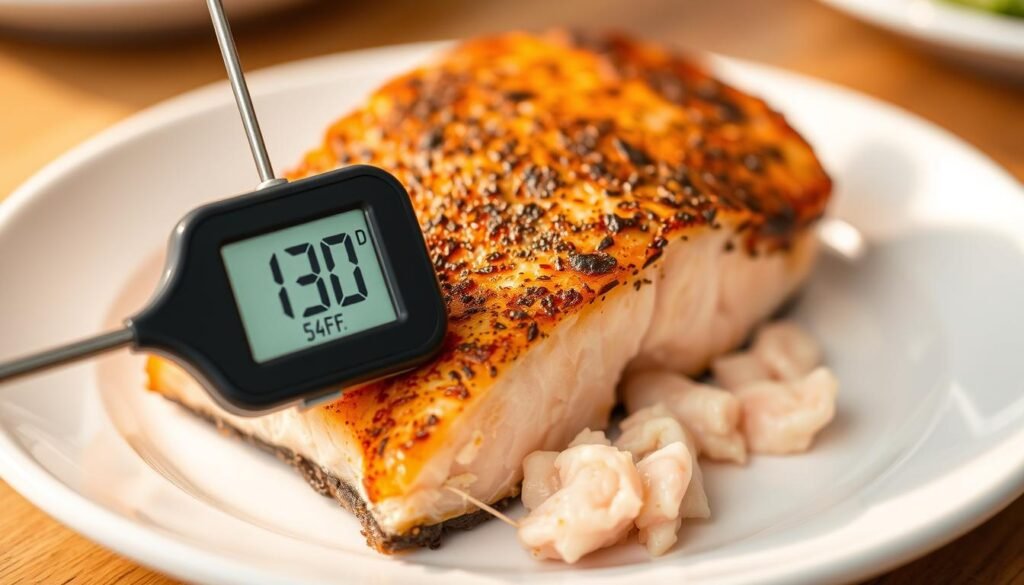
See it and feel it: The flesh should shift from translucent to opaque and separate into moist flakes with a light press. I test the thickest part gently; it should flake without crumbling and still feel slightly springy.
Use a thermometer for precision
I aim for about 125°F at the center when I want a restaurant-style result, while the USDA safe mark is 145°F measured at the thickest part. Insert the probe quickly to keep juices intact.
Time by thickness
In a properly preheated skillet, total time is often around 6–10 minutes, depending on thickness and final texture you prefer. After the initial sear I lower the heat so the interior can finish without overcooking.
Why these cues matter
- Visual: Opaque flesh and clean flake show proteins have set.
- Temperature: I watch temperature and pull slightly early for carryover.
- Touch: A quick fork test confirms moist, cooked salmon rather than dry meat.
Pro tips for crispy skin and a golden sear
A tight routine — dry, hot, patient — is what creates that crackling skin. I keep the steps small and focused so each fillet gets the attention it needs. Follow this short checklist and the result is a deep brown crust with a tender center.
Practical rules I use
- Dry skin is king: I blot each fillet thoroughly. Moisture ruins a crisp crust and causes oil spit.
- Prevent sticking: Use a hot pan with a thin film of oil and add the fish only when it shimmers.
- Manage heat: Start higher to jump-start browning, then lower the flame to finish without burning.
- Minimal fiddling: I resist flipping early — stillness builds a better crust and keeps delicate skin intact.
- Finish smart: Off heat, I melt a touch of butter with lemon and parsley and spoon it over the fillets for shine and flavor.
Serving ideas, sides, and simple pan sauces
A few smart choices for sides and sauces lift the whole dish without extra fuss.
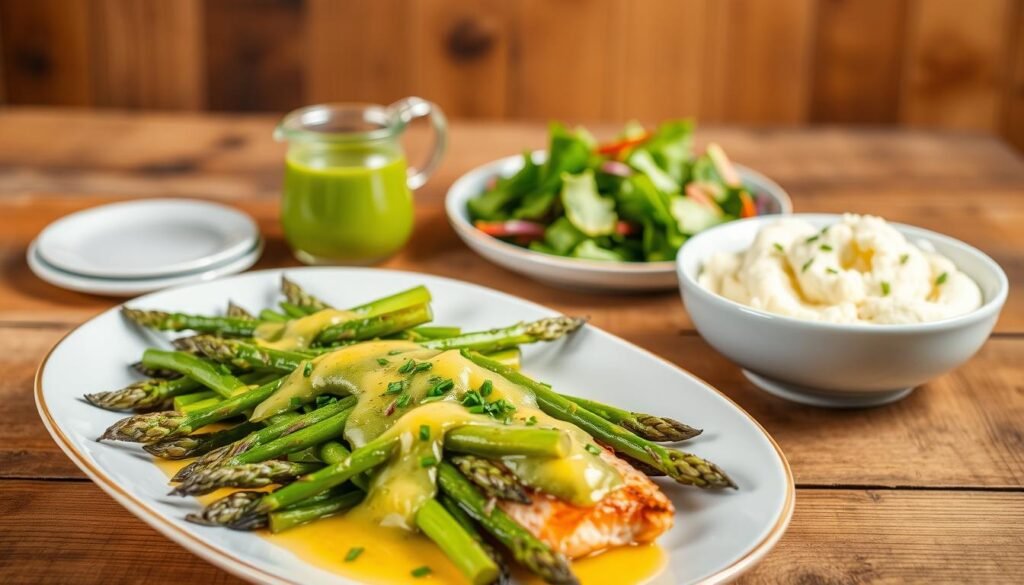
I serve the fillet with easy, comforting sides that balance texture and color. Roasted broccoli, crispy potatoes, or fluffy rice make a complete plate in minutes. A crisp salad adds freshness when I want something lighter.
Simple finishers brighten the flavor: I squeeze a little lemon juice over the warm fish, or whisk a pat of butter with the pan juices for a silky sauce. For a lighter touch, I drizzle good olive oil and toss chopped parsley or chives on top.
Quick serving checklist
- I pair seared salmon with roasted vegetables, rice, or a green salad for a balanced side plate.
- I finish with lemon juice and a bit of butter melted in the skillet for a fast pan sauce.
- Olive oil and herbs work when I want a fresher, lighter finish.
- Leftover cooked salmon keeps up to 3 days in an airtight container; I reheat gently over low heat with a splash of oil or briefly in the microwave covered to retain moisture.
Leftovers tip: I also flake cooled pieces into salads or grain bowls for new recipes without extra effort.
Nutrition highlights and helpful info
Beyond flavor, the plate delivers useful nutrients I track when I plan dinners.
Protein, healthy fats, and minerals
A 6-ounce serving commonly provides about 35–45g protein. That amount keeps me full and fits well with weeknight meals.
The fillet supplies beneficial fat, including omega-3s, and important minerals like iron and selenium. Exact numbers shift with portion size and cooking choices.
Olive oil vs butter: flavor, saturated fat, and balance
I usually use a small amount of olive oil when I want a lighter profile. It reduces added saturated fat and keeps the dish bright.
When I finish with a pat of butter, the flavor improves but saturated fat rises. I balance that by choosing sides and portion sizes.
- I lean on salmon for its high-quality protein and filling power.
- The fish gives healthy fat, and I tailor richness with oil or butter.
- Watching saturated fat helps me enjoy the meal without overdoing it.
- Minerals like iron add nutritional value versus some red meat options.
Quick note: This information helps me plan satisfying plates that taste great and fit my nutrition goals.
Conclusion
Treat the steps like a checklist; small adjustments for your stove will make results consistent. I season with salt and pepper, preheat the skillet, and add oil only when the surface shimmers. That routine builds a lasting crust and keeps the fillets tender.
Watch time and temperature closely. A few minutes per side and attention to the skin side tell you a lot. I finish with a bit of butter and a quick squeeze of lemon for shine and juice.
This simple recipe fits weeknight life. Use cast iron or nonstick, pair the fish with a bright side, and repurpose cooked salmon for salads or bowls the next day.