


I keep this simple: roast halved squash at 400°F for about 30–40 minutes for al dente strands that still have a nice bite. I prefer roasting because it adds caramelized edges and makes the strands easy to separate with a fork.
I start by cutting the squash, brushing a little olive oil, and seasoning lightly with salt and pepper. I place the halves face down on a baking sheet, poke a few vents in the skin, and roast until a fork test shows tender but not soggy strands.
If a full cut feels risky, I nudge the process with a quick microwave burst or bake the whole fruit for about 10 minutes after pricking it. Size, oven calibration, and season affect exact minutes, so I always test at the low end and add time in small steps.
This short method gives you repeatable results you can use in any spaghetti-forward recipe, leaving room to build flavor with sauces or herbs later.
Key Takeaways
- Roast at 400°F for 30–40 minutes for al dente strands.
- Halve, oil lightly, season, and place cut side down on a baking sheet.
- Use a fork test at the lower time range; extend in small increments as needed.
- Microwave or par-bake whole squash for a quick shortcut.
- Light seasoning early leaves space to add sauces and herbs later.
What I Look For When Cooking Spaghetti Squash (and Why Timing Matters Right Now)
I check the squash’s weight and stem first—those small signs tell me a lot about final texture. Firm, heavy-for-size fruit with a dry stem usually gives better, less watery strands after roasting.
I stabilize the squash and use a sharp chef’s knife. If it resists, I soften it first: five minutes in the microwave or ten minutes at 350°F after pricking the skin to vent steam. That keeps cutting safe.
I roast cut side down so moisture drains instead of pooling. I think about time and method together—400°F for a firmer bite, lower temps for tender strands.
- I start checks early and add time in small increments to avoid overcooking.
- I season lightly at first so sauces later can shine.
- My mental checklist: safe cut, vent, right oven temp, early fork test—repeatable and reliable.
“A quick soften-first step can save a risky cut and a ruined evening.”
How long to cook spaghetti squash
I set the oven and plan timing around the squash’s size and firmness. That gives me a reliable baseline before I start roasting or using a faster method.
Oven at 400°F
About 30–40 minutes for al dente strands. I start checks at 25–30 minutes and add time only until a fork slides in with slight resistance.
Oven at 375°F
Roughly 40–50 minutes. This temp helps excess moisture run away from the cut side and gives gentle caramelization without soggy flesh.
Oven at 350°F
About 40–55 minutes. I use this when I want very tender strands that still hold shape in the pan.
Microwave guide
Around 20 minutes total for cut halves face down with about 1 inch of water. Check early so the microwave doesn’t over-soften the flesh.
- I always place the halves cut side down so liquid can drain and strands stay separate.
- Size and oven variance mean larger fruit may need extra minutes—check a little early and add time in small steps.
- I judge doneness with a fork: tender but still a bit firm so the strands pull long and distinct.
My Step‑by‑Step Roasted Spaghetti Squash Method
I preheat the oven to 400°F so the roast starts in steady heat. This sets a predictable baseline for timing and texture.
I slice the squash lengthwise with a sharp knife, then scoop seeds and stringy ribbing into a bowl. A light drizzle of olive oil and a small pinch of salt and pepper is all it needs.
I poke a few vents in the skin and place each half cut side down on a sturdy baking sheet. Keep the pan steady in the oven so heat circulates evenly while baking.
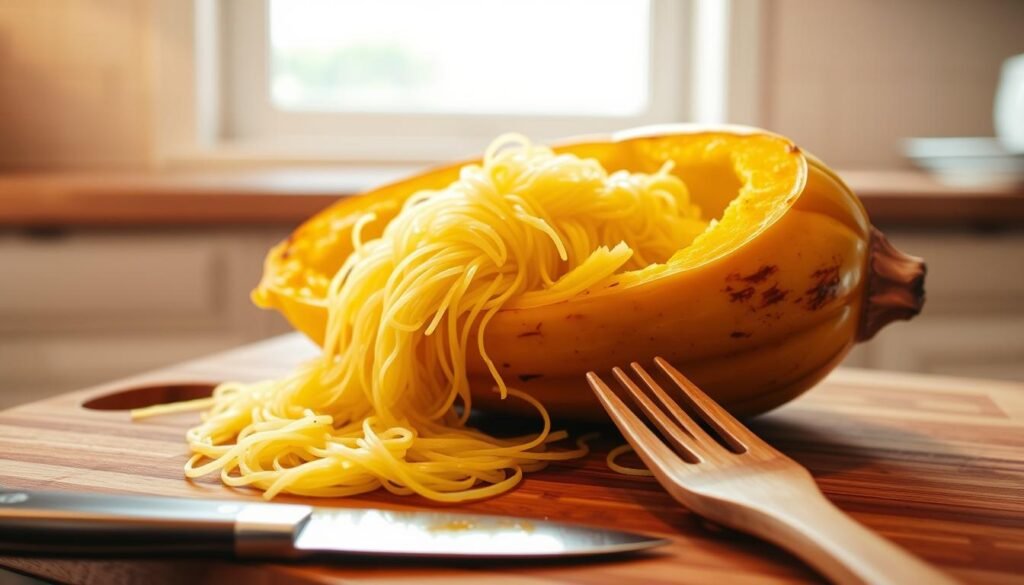
Roast about 30–40 minutes until the exterior shows light browning and a fork meets tender flesh with a touch of firmness. Let the halves cool enough to handle.
Use a fork to scrape long strands from the edge toward the center. I fluff the strands in the shell or move them to a bowl, then taste and finish seasoning before serving.
Choosing the Right Temperature for Texture
Texture begins with temperature—what I set the oven to changes the final bite. I decide first if I want live, slightly firm strands or soft, yielding flesh. That choice guides my baking method and minutes in the oven.
Al dente vs. softer strands: adjusting minutes and temps
If I want al dente strands that stand up in a sauce, I use 400°F for about 30–40 minutes and test early. A quick fork check stops me from overdoing it.
For a touch more caramelization but less risk of sogginess, I pick 375°F and aim for 40–50 minutes. The flavor deepens and moisture drains away with this balance.
When I choose 400°F, 375°F, or 350°F
I go with 350°F when a softer finish fits the recipe—think layered bakes—planning 40–55 minutes depending on squash size. Larger squash need extra minutes; smaller pieces finish sooner.
“A fork that slides in but still meets slight resistance means I’ve hit the right texture.”
- Method: keep halves cut side down so liquid escapes.
- Time: always judge by feel, not the timer alone.
- Seasoning: go light while roasting and layer flavor after shredding.
Quick Microwave Method When I’m Short on Time
When I’m pressed for time, I turn to the microwave for a quick, reliable finish. This keeps dinner moving while still giving me nice strands for a fast plate.
Safety first: I always prick and vent the skin before softening a whole squash. Then I microwave it about five minutes or pop it in the oven at 350°F for ten minutes if the microwave isn’t available.
Microwave steps that work
- I set cut halves face down in a microwave-safe dish with roughly an inch of water so steam cooks the flesh evenly.
- Start checking at about 15 minutes and continue in short bursts until a fork slides in easily.
- Handle the hot dish and squash carefully—steam and water collect under the halves.
I scrape strands with a fork right in the shell, fluff them, and finish with a quick toss in a skillet if I need to evaporate extra moisture. This method is my go-to when I want ready spaghetti strands for a fast dish like pesto or a quick marinara.
Prep, Safety, and Cutting Tips I Trust
Before any blade meets the shell, I make the squash stable by trimming its top and bottom so it sits flat. A steady base keeps the knife from slipping and makes the next steps simple and safe.
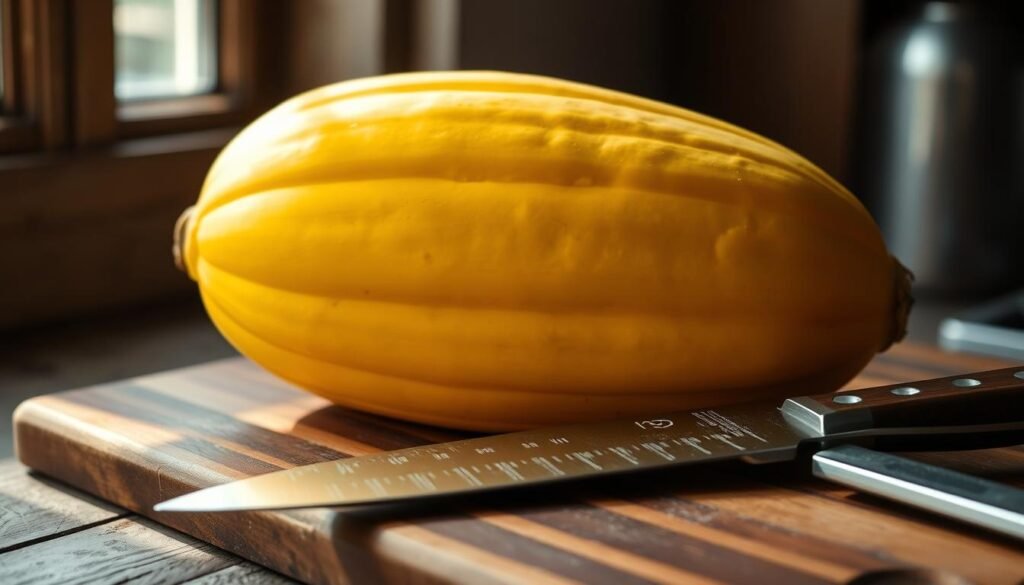
I use a sharp chef’s knife and avoid forcing the blade through the tough stem. If the shell feels stubborn, I pre-soften it for about 10 minutes at 350°F or for five minutes in the microwave. That extra softening is a reliable safety tip.
I score the skin before I press down. Scoring gives the knife a guided path and lowers the pressure needed to split the squash. I stand it upright and cut straight down for a clean cut.
- I always pierce or score the skin before any heat—never cook a whole unvented squash; it can burst.
- I scoop the seeds and stringy inside with a sturdy spoon so the cavity is clear for roasting.
- I place each squash half cut side down for roasting so moisture drains and strands stay distinct.
One hand stays well above the blade path; if needed, I brace it with a folded towel for extra protection. I keep a fork handy to test doneness and to shred strands after a short cool. Finally, I tidy the board and clean the knife between steps for a smooth workflow from prep to cooking.
Seasoning, Serving Ideas, and Nutrition Perks
A light seasoning lets the natural strands sing without stealing the show. I brush each half with a little olive oil and give it a careful sprinkle salt and pepper before roasting. Tucking rosemary or thyme under the flesh adds a warm aroma while it bakes.
Simple finishes that boost flavor
After I scrape the cooked strands, I finish with a drizzle of oil and a quick sprinkle salt and pepper to taste. Fresh parsley or a pinch of red pepper flakes brightens the bowl without masking gentle notes.
Serving ideas I use on weeknights
- I make it a pasta-night swap with marinara and meatballs for a lower-carb twist.
- Tossed with pesto, it becomes a fast, fragrant recipes winner.
- As a side, it pairs well with grilled chicken, fish, or roasted vegetables for a colorful plate.
Nutrition perks worth noting
Spaghetti squash is low calorie and naturally gluten-free. It gives a good dose of fiber plus vitamin C and beta‑carotene, so it fills a plate without weighing meals down.
“I keep a batch on hand for quick recipes — it reheats well and soaks up sauce without getting mushy.”
Storage, Reheating, and Make‑Ahead Tips
A fast cool on a rimmed baking sheet makes a big difference in texture when I store leftovers. I spread the warm strands on the sheet so steam escapes and the flesh stops carrying extra water.
Refrigeration: I transfer cooled, cooked spaghetti squash into airtight containers. I keep them in the fridge for up to 4 days; with quick cooling and clean handling I’ve seen them last near a week.
Freezing: I flatten portions in freezer bags so they thaw fast and stack easily. I label each bag with date and portion size and store for 3–6 months for ready meals and recipes.
Thaw and reheat
I thaw overnight in the fridge, then reheat in the microwave about 1–2 minutes, stirring or fluffing halfway so heat spreads and the strands stay separate.
- I keep sauces in separate containers so the cooked spaghetti holds texture.
- I add a splash of oil or a little sauce after reheating to revive flavor without making it watery.
- I portion single servings for quick lunches and easy weeknight builds.
“Cool fast, store smart, reheat gently — and your leftovers will taste like a fresh batch.”
Conclusion
To finish, I focus on repeatable steps that protect texture and speed dinner prep. Preheat oven, halve safely, scoop seeds, brush with olive oil, sprinkle salt and pepper, poke the skin, and set each half cut side down on a baking sheet.
For timing, I aim for 400°F (30–40 minutes), 375°F (40–50 minutes), or 350°F (40–55 minutes) and test with a fork. For a quick option, microwave halves face down in a dish with water for about 20 minutes.
Scrape the inside with a fork, finish with a light drizzle of olive oil and a pinch of salt and pepper, then toss into your favorite recipe or pasta-style dishes.
Store cooled cooked spaghetti squash in the fridge for a few days or freeze portions for months—ready strands make weeknight meals simple.

















One Response