

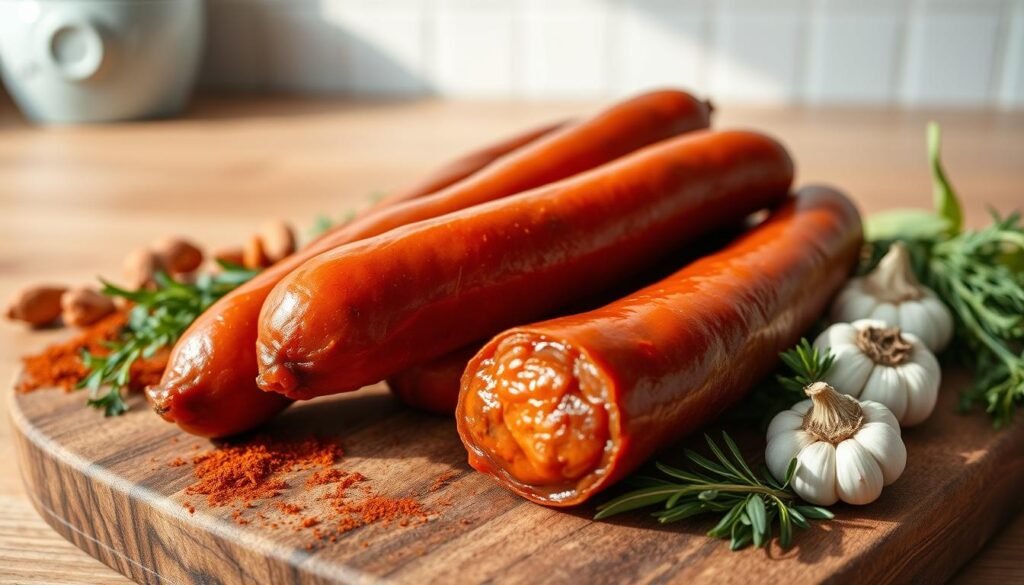
I’ll show you exactly how I cook chorizo at home using simple stovetop, grill, and oven methods. My goal is clear: turn basic sausage from the local grocery store into juicy, flavorful dishes every time.
First, I explain what chorizo is and the small differences you’ll notice in the pan. Those differences change timing, heat, and the final dish, so I cover visual cues and doneness tips you can trust.
I walk you through a practical kitchen setup and the right pan for the job. You’ll also get shopping advice for buying at a grocery store or Mexican market and quick add-ins like onions and peppers to boost flavor.
By the end, you’ll have a clear plan and a wide variety of chorizo recipes that work for breakfast, lunch, or dinner. Simple safety and storage tips finish the intro so you can meal-prep with confidence.
Key Takeaways
- Simple methods for stovetop, grill, and oven yield reliable results.
- Know the visual and timing cues that show doneness.
- Choose the right pan and basic add-ins for fast, bold flavor.
- Shop confidently at your local grocery store or market.
- Use storage and reheating tips for safe meal prep.
What I Mean by Chorizo: Spanish vs. Mexican (and Why It Matters in the Kitchen)
Two main styles of chorizo sit on most shelves, and each one needs its own approach at the stove.
Spanish chorizo is a cured, often smoked sausage seasoned with paprika and garlic. It is firm and usually ready to eat sliced. I warm it gently over low to medium heat to render fat and keep the texture intact.
Mexican chorizo is raw ground pork mixed with chile, vinegar, and spices. This meat must be fully cooked before serving. I break it up in the pan so the spices bloom and the fat renders evenly.
Choosing the right type of chorizo changes cooking time, heat level, and texture in your dishes.
Tex-Mex versions can be deeply red, which hides browning; I watch for fat rendering and texture rather than color alone. Knowing these differences lets me pick the proper heat and pairings—paprika-rich Spanish slices for tapas, spicy Mexican crumbles for eggs and tacos.
- Key tip: cured is safe eaten as is; fresh needs full cooking.
- Match heat and technique to the type of chorizo you buy.
Shopping Smart: Finding Fresh Chorizo at Your Local Grocery Store
I shop with a plan: knowing labels and textures saves time and keeps meals balanced. Across the U.S., this sausage is common in both supermarkets and Mexican markets, but quality varies a lot.
What I check while I browse
Look for raw links or loose packs so you can remove casings and control texture in the pan. Scan the label for clear ingredients like made pork, chile peppers, garlic, paprika, cumin, and vinegar.
Brands and quality cues
- I often see Cacique, Supremo, Andy Garcia Foods, El Mexicano, and Chorizo de San Manuel at the grocery store; I check date codes and firmness through the casing.
- Mexican markets usually carry house-made links — I ask about spice blends and heat levels before buying.
- If labels list heavy fillers or odd byproducts, the sausage may render greasy and crumbly; I buy a small pack first and test with a quick sizzle at home.
If I can’t find a clean option, I make chorizo at home using ground pork and my spice blend. That way I control fat, salt, and spice for better cooking results and a wide variety of dishes.
Essential Gear and Ingredients for Even Cooking
A few reliable tools make all the difference when I aim for even cooking and consistent flavor. I keep my setup simple so weekday meals are fast and repeatable.
Best pans for the job
I reach for a heavy cast iron skillet or a nonstick frying pan. Cast iron gives deep browning and steady heat. A nonstick frying pan makes crumbling easier and cleanup quick.
Heat control and small wins
Medium-high heat renders fat without burning spices. I preheat the pan so meat sizzles on contact; that prevents stewing and keeps texture meaty.
- I use a sturdy spatula or wooden spoon for breaking up sausage; sometimes a potato masher for finer crumbles.
- A small bowl and fine-mesh strainer help me spoon off excess fat for a lighter finish.
- Chopped aromatics—onions, peppers, garlic—go in once fat renders so flavors bloom in the same pan.
- Taste before salting: many links are already seasoned well.
Keep gear simple and reliable. With the right pan, steady heat, and a few quick tips, I get consistent results every time I’m cooking chorizo in my kitchen.
How to Cook Chorizo on the Stovetop (My Go-To Method)
My favorite weekday method uses a hot skillet and a quick crumble for even browning and big flavor. I remove the casing, then break loose meat into the pan so ground sausage cooks evenly and fast.
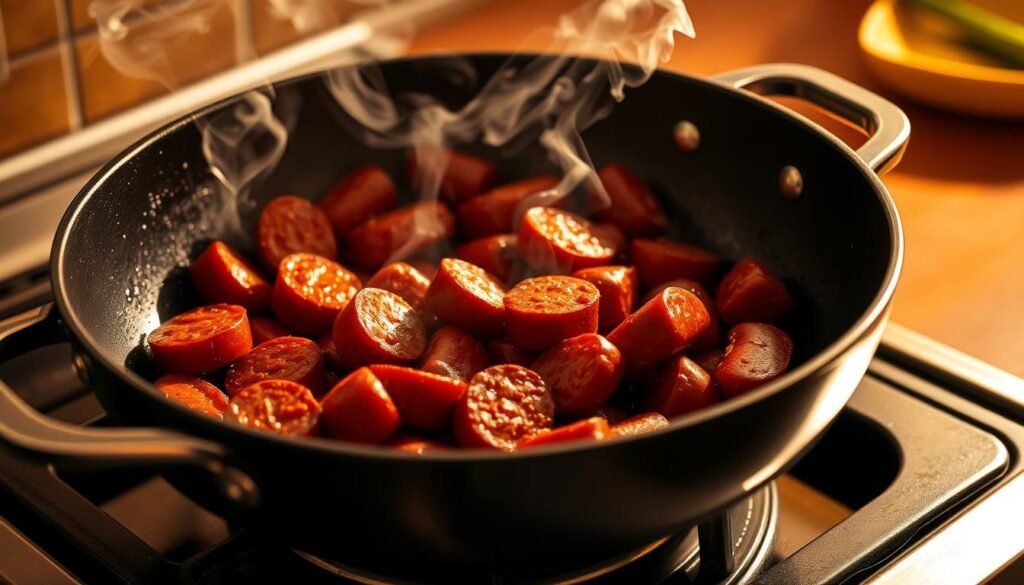
Prep: Start with a hot nonstick or cast iron pan over medium-high heat. Add loose pork and use a spatula to crumble. Once fat begins to render, add onions, peppers, and garlic so aromas bloom in the seasoned fat.
Cook time & cues: Stir often and cook for about 6-9 minutes. Watch for rendered fat, a firmer texture, and no soft raw spots. For safety, make sure there is no visible pink and the chorizo cooked feels crumbly-firm.
“Tip: Tex-Mex styles may stay deep red; rely on texture and fat rendering rather than browning alone.”
- Drain excess grease by tipping the pan or blotting on a paper towel.
- Lower heat if spices start to scorch; splash a little water to deglaze.
- Season sparingly—many links already have enough salt. Finish with lime or salsa for balance.
Grill and Oven Options for Chorizo Lovers
I like choosing a method based on flavor and time. A grill adds smoke and snap, while the oven gives even heat with less fuss. Both work well for links and larger meal prep.
Grilling tips
On the grill, use medium-high heat and cook links for 15-20 minutes. I turn every 4–5 minutes so the casing crisps evenly and the interior reaches a safe temperature.
- I lightly prick the casing in a couple spots to relieve pressure and avoid ruptures.
- To check doneness, I make a small cut: no pink and clear juices mean fully cooked.
- If flare-ups char the outside, I move sausages to indirect heat to finish without burning.
Oven method
Preheat to 375°F and bake for 20-30 minutes on a rack-lined sheet. Flip once midway so both sides brown evenly.
After baking, I let rest minutes before slicing. That short rest helps juices redistribute for cleaner cuts and better texture.
“For sheet-pan meals I add peppers and onions; the drippings season the vegetables for an easy dish.”
- Spanish chorizo can be warmed more gently so the cured texture stays intact while still releasing paprika-scented fat.
- Indoors or out, steady heat and frequent turning create the best snap, sizzle, and juicy bite.
Chorizo Recipes and Serving Ideas I Make on Repeat
A handful of reliable plates lets me turn a single pack of sausage into several meals fast. I pick recipes that share a few pantry staples so prep stays simple and flavor stays bold.
Breakfast through dinner: I sauté mexican chorizo with potatoes and peppers, then fold in eggs for breakfast tacos or a skillet hash that works as a fast weeknight meal.

Family-friendly dishes I reach for
- Papas con chorizo: crispy potatoes tossed with crumbled sausage and onions, served with warm tortillas and cilantro.
- Street tacos: quick-sizzle pork chorizo, chopped onions, cilantro, a squeeze of lime, and your favorite salsa.
- Choriqueso: melty chorizo cheese with caramelized onions and peppers—perfect for game day or a shareable appetizer.
Easy add-ins and small upgrades
I often add peppers, onions, and a splash of wine when making empanadas or skillet fillings. The wine lifts richness and helps deglaze the pan for better flavor.
For Spanish-style bites, I warm sliced spanish chorizo just enough to release paprika-scented fat and pair it with crusty bread, roasted peppers, or manchego. I also freeze portions of homemade mexican chorizo so a packed meal is minutes away.
“These recipes anchor my lineup because they deliver huge flavor with minimal prep.”
Conclusion
Let me summarize the practical checks I use so chorizo at home is tasty and safe. Match the method to the type chorizo: cured Spanish needs a quick warm and slice; fresh chorizo demands a hot frying pan and about 6–9 minutes until no pink remains.
I rely on texture and fat rendering over color, especially with Tex‑Mex blends that stay bright. For grill work plan 15–20 minutes; in the oven bake at 375°F for 20–30 minutes and then , let rest minutes before slicing.
Use good inputs—made pork with clean labels—and simple add‑ins like onions, peppers, and a splash of acid. Follow these tips and you can cook chorizo at home confidently and serve a wide variety of bold, reliable food every time.


















One Response