
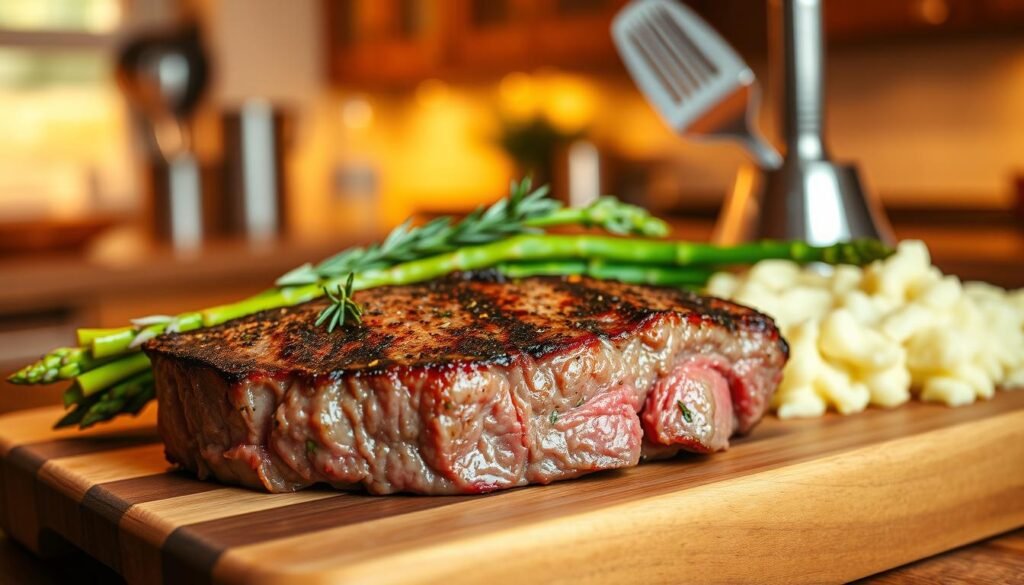
Surprising fact: restaurants serve tens of millions of premium tenderloin steaks each year, yet most home cooks miss one simple step that makes the difference between dry meat and buttery tenderness.
I love this cut for its ultra-tender texture and mild flavor. The small central strip of the tenderloin yields steaks that feel luxurious on the fork.
My go-to method is simple and reliable. I let steaks sit at room temperature for 30–40 minutes, then sear in a ripping-hot cast-iron pan, baste with butter, garlic, and rosemary for about one minute, and finish in a 400°F oven until the center reaches the target.
Always use an instant-read thermometer, pull the meat 5°F shy of your target, and rest 5–10 minutes tented with foil for carryover cooking and juiciness.
Key Takeaways
- Room temp matters: 30–40 minutes evens cooking.
- Sear then finish: hot pan, butter baste, oven at 400°F.
- Use a thermometer: pull 5°F early and rest 5–10 minutes.
- Thickness counts: aim for 1.5–2 inches for best crust and center.
- Avoid non-stick: use cast-iron or oven-safe stainless for deep browning.
Why filet mignon shines at home: tenderness, mild flavor, and my game plan
At home, this cut rewards simple technique with an unmatched, buttery texture. The tenderloin muscle does very little work, so the fibers stay fine and give that melt-in-your-mouth feel without heavy marinades.how-to-cook-spare-ribs-in-the-oven
What makes the tenderloin cut special
Delicate texture: Because the muscle is low-activity, the meat reads as exceptionally tender. A light seasoning of salt and pepper lets the natural flavor breathe.
Choose thickness wisely: I aim for 1.5–2 inch cuts from a trusted butcher. That thickness gives time to build a golden crust while keeping the center rosy and juicy.
My steakhouse-at-home approach
My game plan is simple: get a heavy pan screaming hot, sear for color, baste with butter and aromatics, then finish in a 400°F oven. This hybrid method blends the pan’s caramelization with the oven’s steady heat for consistent results.
- Sear first for a deep crust.
- Baste briefly with butter, garlic, and rosemary.
- Finish in a hot oven to reach precise doneness.
With a thermometer and a few tools, you can recreate that steakhouse feeling any night. For a quick reference, see my pan-seared guide.
The simple gear and ingredients I rely on
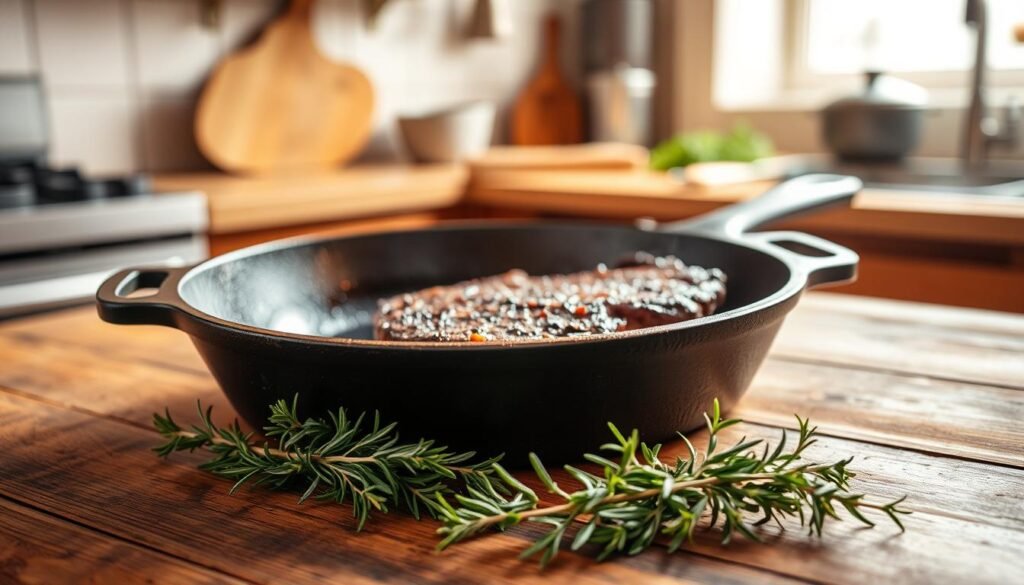
A handful of sturdy tools and classic ingredients make the difference in every sear. I keep my station lean: heavy cookware, clear temps, and a short list of aromatics.how-long-to-cook-chicken-tenders-in-air-fryer
Skillet and tools
I reach for a 10–12 inch cast-iron skillet because it holds heat and gives the most aggressive sear. A heavy, oven-safe stainless pan works if cast-iron isn’t available.
Avoid non-stick: those coatings don’t brown meat well and can be damaged by very high heat.
Key ingredients and extras
- Thermometer: an instant-read unit removes guesswork. I pull steaks 5°F shy of my target and rest for carryover.
- Oil: neutral, high-smoke-point oil like avocado oil for the initial sear.
- Butter plus fresh rosemary and peeled garlic cloves for quick basting.
- Salt and freshly ground black pepper to season and form crust.
- Tongs with grip, a rimmed sheet pan for resting, and oven mitts for safety.
With these basics, the process stays consistent. Proper gear and simple ingredients make steaks sing, and they let the filet mignon’s subtle flavor shine.
Step-by-step: my exact method to cook filet mignon in a pan and oven
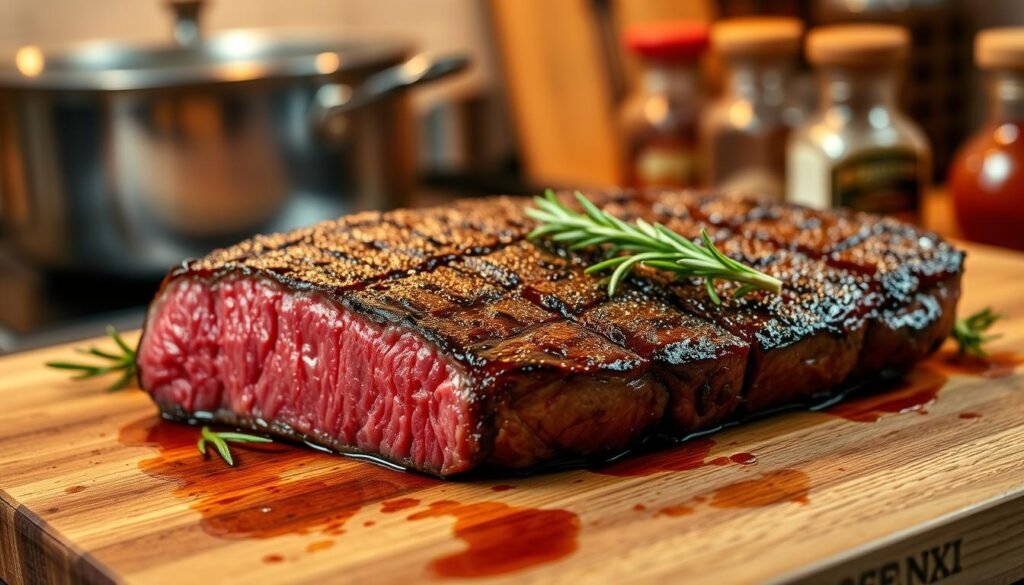
Start by pulling the steaks from the fridge so they sit for 30–40 minutes and come close to room temperature. This short wait evens cooking from edge to center and cuts down on uneven doneness.
Season all sides right before cooking with kosher salt and freshly ground black pepper. Press the seasoning in so it sticks and helps form a deep, golden crust.how-long-to-cook-pork-butt-in-oven
Heat and sear
I preheat an empty cast-iron or oven-safe stainless skillet over high heat until it’s very hot. Then I add a thin sheen of high-heat oil so the steaks sizzle on contact.
I sear the first side without moving for about 2 minutes to build color, then roll the edges for roughly 1 minute so the fat renders and browns.how-to-cook-chicken-wings
Butter-baste and aromatics
After flipping, I add butter, smashed garlic, and rosemary, and baste continuously for 1 minute. The foaming butter perfumes the meat and helps finish the crust.
Finish in the oven and rest
I preheat the oven to 400°F and slide the skillet in to finish. For doneness I use a thermometer and remove at the pull temps: ~115°F (rare, about 3–4 minutes), ~120°F (medium-rare, 5–6 minutes), ~130°F (medium, 6–7 minutes), ~140°F (8–9 minutes), ~150°F (10–11 minutes).
Move steaks to a plate (not the hot pan), tent loosely with foil, and rest 5–7 minutes so carryover adds warmth and juices redistribute. This sequence—hot skillet, quick sear, butter baste, oven finish, then rest—gives a steakhouse crust and an even, tender center every time.
Doneness, time, and internal temperature: my thermometer-first guide
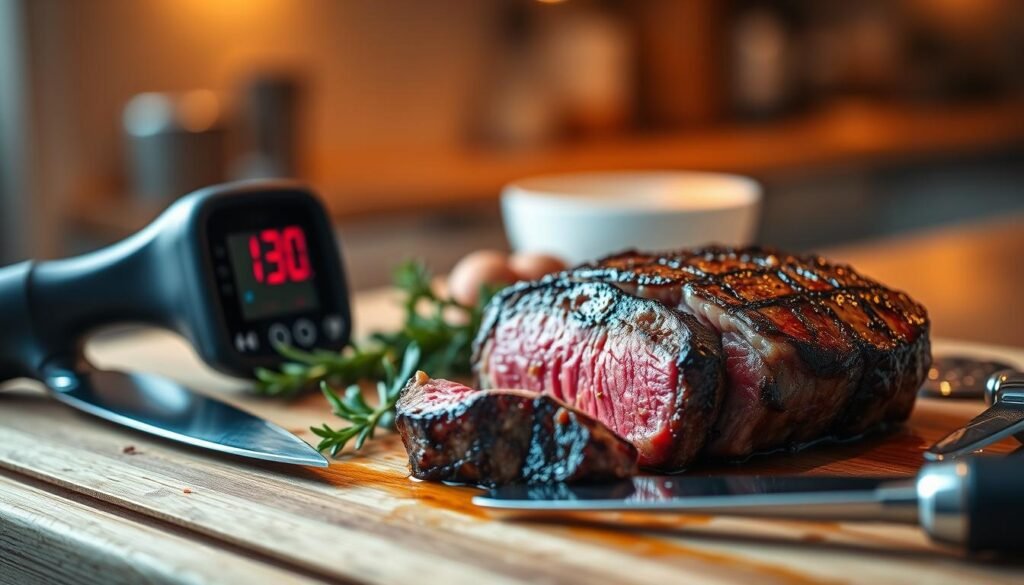
A reliable thermometer is the single tool that keeps doneness consistent from sear to plate. I use it more than the clock because thickness and pan heat shift actual temperature by minutes.
“I pull steaks about 5°F early and rest them; that small step preserves juiciness and finishes the carryover rise.”
Rare
I remove a steak at ~115°F, then rest until 120–125°F. The oven portion after searing is usually short — about 3–4 minutes.how-long-to-cook-spaghetti-squash
My favorite: medium-rare
For medium-rare I pull near 120°F and expect a final 125–130°F after a 5–10 minute rest. Oven time after sear typically runs 5–6 minutes for a 1.5–2-inch steak.
Medium to well-done
Pull at ~130°F for medium (finishes 135–140°F, ~6–7 minutes in the oven). For medium-well and well-done, plan pulls at 140°F and 150°F respectively and expect 8–11 minutes; juiciness drops as temperature rises.
Carryover cooking and technique
Carryover cooking adds about 5°F during a 5–10 minute rest. I always remove steaks 5°F shy of my target and tent loosely while juices redistribute.
| Target Doneness | Pull Internal Temp | Rested Temp | Approx. Oven Time (after sear) |
|---|---|---|---|
| Rare | 115°F | 120–125°F | 3–4 minutes |
| Medium-rare | 120°F | 125–130°F | 5–6 minutes |
| Medium | 130°F | 135–140°F | 6–7 minutes |
| Medium-well | 140°F | 145–150°F | 8–9 minutes |
| Well-done | 150°F | 155–160°F | 10–11 minutes |
- I insert the thermometer from the side into the thickest part for the best reading.
- If the steak is early, tent on a warm plate; if lagging, return to the oven 1–2 more minutes and recheck.
- Track internal temperature rather than guessing — one degree matters for perfect doneness.
Flavor upgrades I love: compound butter, béarnaise, and pan sauce
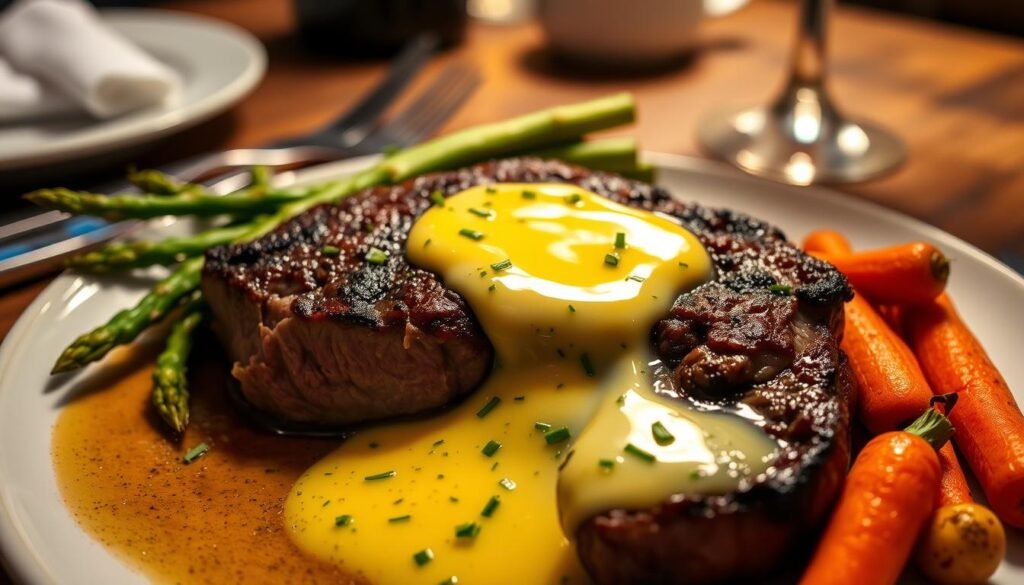
Finishing touches are where I take a great tenderloin and make it memorable. A small pat or a glossy pan reduction lifts the mild character without masking it. I keep things simple and balanced so the texture stays front and center.
Garlic-herb compound butter
Quick and powerful: I mash softened butter with finely minced garlic, chopped parsley or thyme, and a pinch of salt.how-to-cook-frozen-crab-legs
Right after resting, I set a coin on the warm steak so it melts and mixes with the juices. If I have extra, I roll it in parchment and chill for easy future use.
Béarnaise or red wine reduction
When I want a classic finish, béarnaise brings a tarragon-kissed richness. For a simpler route, I deglaze the pan with red wine, add beef stock, reduce until glossy, and mount with butter for shine.
“A light sauce or butter lets the steak sing while adding restaurant-level polish.”
For a full béarnaise primer, I sometimes refer to a trusted recipe for homemade béarnaise: homemade béarnaise.
Serve it right: sides, wine pairings, and quick storage tips
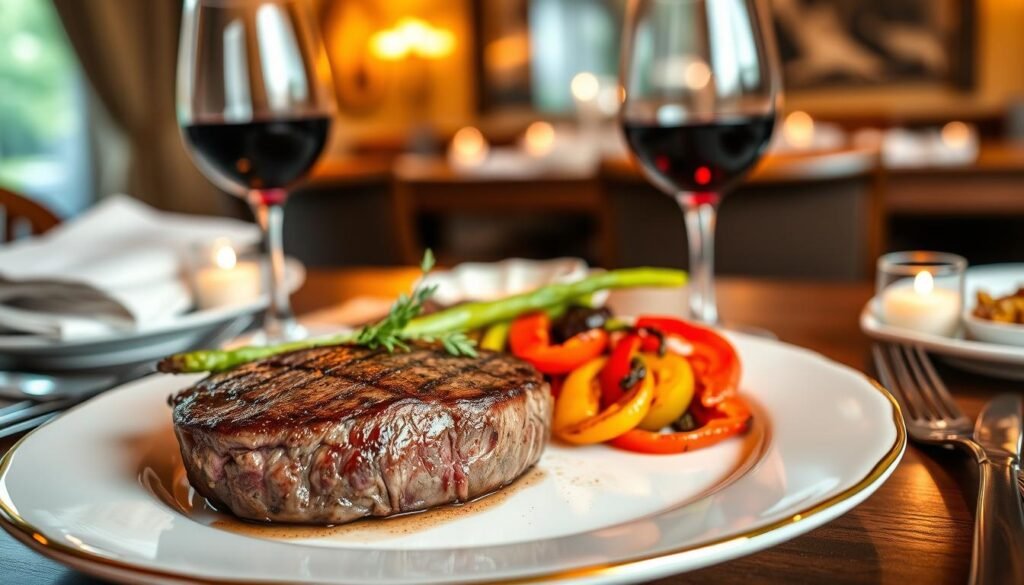
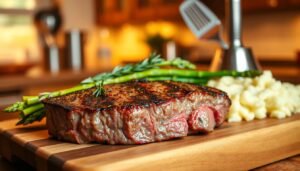
The right accompaniments make the steak feel like a restaurant meal without extra fuss. I build a steakhouse-style plate with creamy mashed potatoes, roasted asparagus or Brussels sprouts for texture and a little bitterness, and a crisp green salad for brightness.
A knob of compound butter or a drizzle of pan sauce ties the dish together. I serve on warm plates so steaks stay hot through the first few bites and spoon reserved pan juices over the top for extra savoriness.
Wine and pairing notes
I usually reach for a cabernet sauvignon for structure and tannin, or a silky pinot noir when I want something lighter. If I’m in a white mood, a buttery chardonnay complements the rich texture nicely.
Leftovers, fridge and freezing
For storage I cool steaks completely, then pack whole or pre-sliced. Properly sealed leftovers keep 4–5 days in the fridge; if I need longer I cool slices, squeeze air from a freezer bag, and freeze for up to 3 months.
Gentle reheating
I thaw frozen steak in the fridge overnight, then warm gently so the cut stays tender. A quick 1–2 minute blast in the microwave or a low oven reheats without blowing past my preferred doneness.
“A quick sprinkle of flaky salt or a dab of compound butter after warming revives flavor and moisture beautifully.”
- I often pre-slice leftovers so they’re ready for salads, grain bowls, or steak-and-eggs the next day.
- Serve on a warm plate and aim for warm, not hot, when reheating—the filet can dry fast if heated too aggressively.
how to cook a filet mignon: my quick checklist and troubleshooting
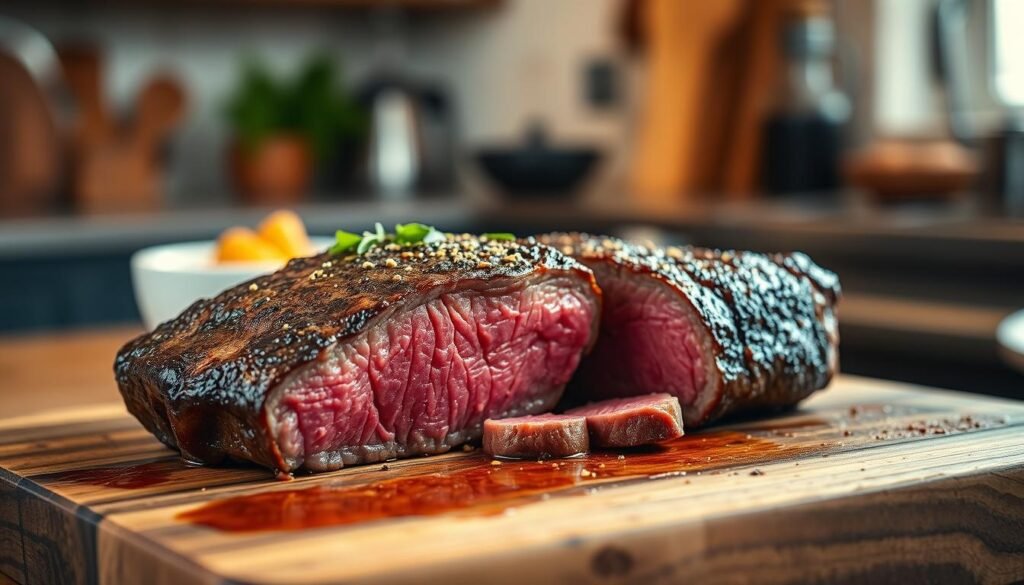
A short checklist keeps the kitchen calm and the steak reliable every time.
My non-negotiables: let steaks rest 30–40 minutes at room temperature before cooking. Heat a dry cast-iron or oven-safe stainless skillet until it’s very hot, then add a little high-smoke-point oil.
I set a timer for sear windows: sear without moving for about 2 minutes, baste with butter, garlic, and rosemary for 1 minute, then finish 4–10 minutes in a 400°F oven depending on desired doneness.
My essentials
- Room temp steak prevents a grey band and evens cooking to the center.
- Hot pan and skillet heat create a deep crust; don’t add oil too early.
- Timer and instant-read thermometer keep times honest and doneness consistent.
Common pitfalls and quick fixes
- Moving the steak too soon — wait; a proper sear will release naturally.
- Using a cool pan — heat the skillet until it smokes slightly before oil.
- Overcooking in the pan — finish in the oven and check with a thermometer.
- If the steak sticks, wait another 20–30 seconds; if smoke is excessive, lower the heat or ventilate.
“I pull steaks 5°F shy of my target and rest them tented on a plate — never in the hot pan — so juices settle and carryover finishes gently.”
| Step | Action | Why it matters |
|---|---|---|
| Room wait | 30–40 minutes | Evens internal temperature, avoids grey band |
| Skillet prep | Heat dry until very hot, then add oil | Prevents sticking and creates deep browning |
| Sear & baste | 2 min sear, 1 min baste | Builds crust and flavors the surface |
| Oven finish | 4–10 min at 400°F | Reaches precise doneness without over-browning |
| Rest | 5–10 minutes tented on a plate | Allows carryover and juice redistribution |
When I need a quick refresher or a full walkthrough, I keep a trusted guide bookmarked — see this practical stove guide for an in-depth reference: perfect stove method.
Conclusion
A repeatable routine—hot pan, quick baste, brief oven finish—turns average steaks into dependable winners. ,
My formula: bring the meat near room temperature for 30–40 minutes, sear in a very hot cast-iron or oven-safe stainless skillet with high-heat oil, baste with butter and aromatics for about 1 minute, then finish in a 400°F oven for 4–10 minutes depending on doneness.
I rely on an instant-read thermometer, pull the steak about 5°F shy, and rest 5–10 minutes tented on a warm plate. A pat of butter or a simple pan sauce lifts the tenderloin, and classic sides and a good bottle make it feel restaurant-ready. For an oven-focused primer, see this oven method.